The Essential Role of a Baby's Daily Log Book in Modern Infant Care
Bringing a newborn home is a profound shift in daily life. Amid the joy, there is often a blur of sleepless nights, feeding sessions that blend together, and a quiet uncertainty about whether everything is on track. A structured system for observation becomes more than a convenience; it transforms into a tool for clarity, communication, and confidence. A Baby's Daily Log Book serves exactly this purpose, offering a dedicated space where every detail of an infant's day can be recorded, reviewed, and shared. The simple act of documenting feedings, sleep patterns, diaper changes, and moods creates a reliable reference point that supports both parental intuition and informed decision-making.
While smartphone apps compete for attention, there is a distinct advantage to a physical journal. A printed logbook eliminates screen glare during late-night feedings, never runs out of battery, and provides a tangible record that can be kept for years. The format encourages mindfulness. Writing by hand slows the caregiver down just enough to observe subtle changes that might otherwise go unnoticed. For nannies and extended family members, a shared logbook becomes a communication bridge, ensuring that everyone involved in the baby's care operates from the same factual starting point.
Why Tracking Matters: The Foundation of Confident Parenting
Newborns communicate through patterns rather than words. A cry at 6 p.m. might mean hunger one day and overstimulation the next. Without a consistent record, it becomes easy to misinterpret signals or overlook emerging routines. Tracking creates a feedback loop. When a parent notes that the baby consistently falls asleep more easily after a longer wake window, that insight shapes the next day's schedule. When a nanny records a subtle decrease in appetite across three consecutive mornings, a parent can mention it to the pediatrician before it becomes a larger concern.
Beyond troubleshooting, tracking builds parental confidence. Self-doubt is common in early parenthood. A logbook provides objective evidence that the baby is, in fact, getting enough nourishment, having adequate wet diapers, and gradually consolidating sleep. The data counters the anxiety that can arise from comparison with other babies or from well-meaning advice that does not fit this particular child. Each filled page reinforces the caregiver's attunement to the baby's unique rhythms.
Decoding the Daily Rhythms: What a Comprehensive Baby Log Captures
The most effective infant care journals are thoughtfully structured to capture multiple dimensions of a baby's day. They move beyond simple checklists and provide room for nuance. The following areas represent the core tracking categories that yield the richest insights over time.
Feeding Patterns and Nutritional Insights
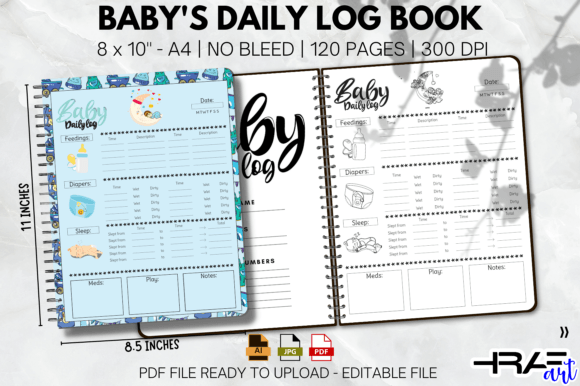
Whether breastfeeding, formula feeding, or combining both, recording each feeding session creates a clear picture of intake. For nursing parents, noting which side the baby fed from and the duration helps prevent engorgement and ensures balanced stimulation. For bottle-fed infants, tracking the ounces consumed at each feeding reveals natural fluctuations in appetite. Some logbooks, including this one, provide dedicated fields for time, type, and quantity. Over weeks, patterns emerge. A growth spurt might show up as a cluster of days with increased demand. A subtle shift toward longer gaps between feedings signals readiness for a schedule adjustment. This data is invaluable during pediatrician visits, where questions about intake often shape guidance around weight gain and development.
Sleep Schedules and Rest Quality
Infant sleep is famously unpredictable, but it is not entirely random. Recording the start and end times of naps and nighttime sleep sessions reveals patterns that are easy to miss when operating on intuition alone. A caregiver might notice that the baby consistently takes a longer morning nap when put down within a specific window after waking. Alternatively, frequent night wakings might correlate with shorter afternoon naps, suggesting an overtired cycle that can be addressed. The Baby's Daily Log Book includes sleep tracking alongside other metrics, making it easy to see how feeding times, activity levels, and rest interact. This holistic view often leads to more effective routines than focusing on sleep in isolation.
Diaper Changes and Health Monitoring
Few topics occupy as much new-parent brain space as diaper output. Wet and dirty diapers are direct indicators of hydration and digestive health. A logbook that includes space to note each change, along with any observations about consistency or color, provides an early warning system. A decrease in wet diapers over 24 hours can signal dehydration before other symptoms appear. Tracking bowel movements helps identify constipation or diarrhea patterns that might relate to dietary changes or illness. This section of the log is often the first thing a doctor asks about during early check-ups, and having a written record eliminates the need to rely on memory.
Mood, Activities, and Developmental Milestones
Feeding, sleep, and diapers form the physiological foundation, but a baby's day also includes moments of play, fussiness, and quiet alertness. A well-designed infant journal includes space for recording the baby's general mood throughout the day, activities such as tummy time, singing, or walks, and any notable developmental moments. A first smile, rolling over, or tracking a toy with coordinated eye movements might be jotted down in the notes section. These entries serve a dual purpose. In the short term, they help caregivers understand what types of stimulation the baby enjoys. In the long term, they become a treasured record of early life, far richer than a standard baby book that only captures major milestones.
The Design Philosophy Behind an Effective Baby Tracker
Not all logbooks are created equal. The structure and layout significantly influence whether caregivers will use the tool consistently. A page-per-day format, as found in this 120-page journal, offers enough space for comprehensive tracking without feeling overwhelming. Each day's sheet includes designated areas for date, time, feeding details, activity notes, and sleep information. This organization reduces decision fatigue. The caregiver knows exactly where to record each piece of information, and the consistent layout makes it easy to scan back through previous days.
Simplicity and beauty matter, especially during a phase of life that can feel chaotic. Clean typography, thoughtful spacing, and a visually calming design make the logbook feel like a supportive companion rather than a chore. The letter-size dimensions of 8.5 by 10 inches provide ample writing room without being bulky. The quality of the PDF, rendered at 300 DPI, ensures that pages print sharply and clearly, whether at home or through a professional print service. Bonus elements, including two cover designs and an editable AI file, offer personalization options that allow the user to tailor the logbook to their aesthetic preferences.
Practical Applications Across Different Caregiving Scenarios
The utility of a daily infant log extends beyond the nuclear family. Nannies and au pairs benefit from a clear, shared system for communicating with parents. At the end of a shift, the logbook provides a complete handover. The parent can see at a glance how much the baby ate, when they slept, and whether any concerns arose. This reduces the need for lengthy verbal debriefs and catches details that might be forgotten in conversation. For families with multiple caregivers, such as grandparents who help during the week, the logbook maintains consistency. Everyone follows the same tracking conventions, and no one has to guess when the last feeding occurred or whether the baby received medication.
Daycare providers and pediatric nurses also find value in structured documentation. While these professionals often have their own systems, a parent-provided logbook can supplement institutional records and ensure that home observations seamlessly connect with clinical or care-center contexts. The notes section at the end of the book provides additional space for summarizing weekly patterns, jotting down questions for the doctor, or recording memorable moments that do not fit neatly into daily categories.
Building a Complete Health Record: Medications, Doctor Visits, and Immunizations
An often-overlooked function of a baby journal is its role as a health record. Infants may need vitamin supplements, treatments for minor conditions like diaper rash, or medications for more serious illnesses. Recording the time and dosage of each administration prevents accidental double-dosing, a risk when multiple caregivers are involved. The logbook also serves as a repository for tracking doctor visits and immunizations. Rather than maintaining separate files, all relevant health information lives in one chronological context. This integration makes it easy to see, for example, whether a fussy period coincided with a recent vaccination or whether a new food introduction preceded digestive changes.
Notes and Reflections: Capturing the Nuances
Structured fields cover the essentials, but the most valuable insights often appear in the margins. A dedicated notes section at the end of the logbook provides space for reflections, questions, and patterns observed over time. A parent might note that the baby seems more content on days when outdoor time is included, or that certain lullabies consistently soothe. These observations, accumulated over weeks and months, form a personalized care manual that no generic parenting book can provide. They also create a powerful record to revisit later. Reading back through these notes can be a source of comfort and perspective during future challenging phases.
Integrating a Logbook into Daily Routines
Consistency is the key to unlocking the full value of any tracking system. The initial days of using a baby logbook require intentional habit-building. Keeping the journal in a consistent, accessible location, such as near the feeding chair or changing table, reduces friction. Many caregivers find it helpful to fill in sections immediately after each event rather than trying to reconstruct the day from memory in the evening. Over time, the practice becomes second nature, woven into the rhythm of care.
The digital nature of this particular logbook adds flexibility. As a printable PDF with instant download access, it can be printed at home in whatever quantity is needed. Some users prefer to print the entire 120-page book and bind it as a complete journal. Others print sections in batches or use a tablet-based annotation app for a hybrid approach. The inclusion of JPG files at 300 DPI and an AI source file opens further creative possibilities, allowing users to customize the layout or integrate it into a broader family documentation system.
Ultimately, an infant daily log is more than a collection of boxes and lines. It is a tool for observation, a bridge between caregivers, and a safeguard for health. It honors the complexity of a baby's early months while bringing order to the natural chaos of new parenthood. Whether used for a few weeks during the intense newborn period or maintained throughout the first year and beyond, the practice of attentive tracking deepens the caregiving relationship. The baby benefits from responsive, informed care. The parent or nanny gains the quiet confidence that comes from knowing they are not just reacting, but truly understanding and supporting the small life in their hands.