Blank Sheet Music Notebook: The Essential Companion for Modern Music Creators
Writing music by hand still carries a creative weight that no screen can fully replace. A sharp pencil moving across a crisp staff line can unlock phrasing, harmonic ideas, and rhythmic nuances that get filtered out by software defaults. For composers, arrangers, educators, and students alike, the blank sheet music notebook remains a direct tool for capturing musical thought—uncluttered, immediate, and infinitely flexible. Today, a thoughtful digital adaptation of that experience blends tradition with modern convenience, allowing you to print exactly what you need, when you need it, without compromising on quality or layout.
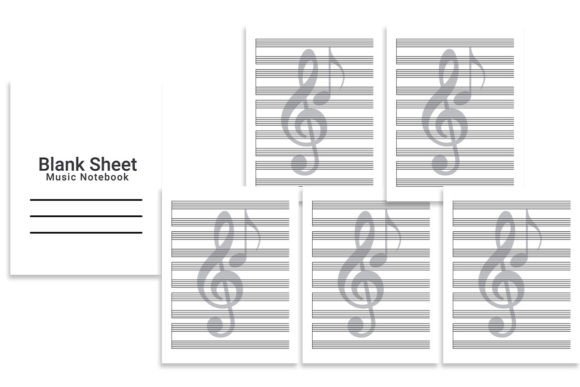
Keep your notes and ideas in a Blank Sheet Music Notebook. Clear, full-page grid lines let you easily write your music on the page. Your download will include AI files, PDF files, SVG files, and high-resolution JPEG pages in CMYK color at 300 dpi. This kind of resource quietly answers a growing need among musicians who want reliable staff paper that matches their workflow, whether they’re sketching out a melody at a piano bench, preparing classroom handouts, or designing a full score layout for a professional engraving project.
Why Handwritten Notation Still Matters in a Digital Age
Notation software and digital audio workstations have revolutionized music production, but they’ve also introduced a layer of friction that many creators don’t fully recognize until they step away from the keyboard shortcut. When you’re forced to think through menu selections, adjust the quantization grid, or fight with automatic beaming, you lose the fluidity that comes from simply drawing a notehead. A physical blank sheet music notebook preserves that tactile connection. It invites experimentation with notation styles, unconventional rhythms, and non-standard grouping without a program correcting your intention mid-thought.
Music educators often observe that students who regularly write notation by hand develop stronger internal hearing and a deeper grasp of rhythmic spacing. The physical act of placing a rest or drawing a slur triggers cognitive processes that clicking a mouse does not. For adult learners returning to music, the blank page becomes a low-pressure space to rediscover theory concepts, jot down ear-training exercises, or compose simple melodic fragments. You’re not committing to a final product; you’re exploring. That freedom is hard to replicate in a template-based environment.
What a Digital Blank Sheet Music Notebook Actually Provides
Instead of searching for loose sheets of staff paper or paying for pre-printed notebooks that never quite match your preferred spacing, a downloadable blank sheet music notebook puts the control in your hands. You receive a master set of pages with clean, full-page grid lines that leave no awkward margins. The design intentionally avoids any branding or intrusive headers, so the entire page serves your notation. Because the file is digital, you can print as many copies as you need, on the paper weight and size that suits your project.
The inclusion of multiple file formats transforms the notebook from a simple printable into a versatile production asset. An AI (Adobe Illustrator) file lets you adjust margins, line thickness, or even extract the staff lines to integrate into other design work. A PDF file gives you ready-to-print pages that maintain perfect alignment across devices. SVG files deliver crisp scaling for on-screen use in teaching apps, websites, or interactive whiteboards. And high-resolution JPEG pages make it easy to drop a staff image into a word processor, blog post, or social media graphic without degrading clarity.
The Practical Edge of AI, PDF, SVG, and JPEG Formats
Different creative tasks demand different file types, and a well-prepared blank sheet music notebook anticipates that range. A graphic designer who builds music method books can open the AI files and customize the staves to match the book’s trim size, then export directly into a layout program. A private instructor who needs a quick worksheet for a Tuesday evening lesson can double-click the PDF and print a clean copy in seconds—no scanning, no cropping. Choral directors or band leaders who upload materials to a learning management system often prefer SVG files because they scale to any screen without pixelation, keeping notation readable on tablets and phones.
The JPEG option frequently gets overlooked but serves an important role for quick previews and casual sharing. Musicians who participate in online forums, composition challenges, or social media music communities can snap a photo of their manuscript or overlay a typed title onto a JPEG staff background. While not intended for high-end print production, these image files provide the flexibility to show a musical idea in a context where opening specialized software would slow down the conversation.
When to Choose Each Format
- AI (Adobe Illustrator): Use when you need to remix the layout, change staff size, or integrate blank sheets into a larger graphic design project.
- PDF: The go-to for reliable printing at home, at a print shop, or through an office supply service—ensures consistent output across devices.
- SVG: Ideal for digital sheet music creation tools, educational platforms, and any scenario where you want infinite scalability without file bloat.
- JPEG: Quick sharing, blog post illustrations, and on-screen markup when printing isn’t required; the 300 dpi resolution still looks clean at moderate sizes.
Why CMYK and 300 DPI Are More Than Technical Specs
Many musicians discover too late that a beautifully designed staff page printed on a home inkjet can look slightly blurred or wash out where lines should be crisp. The detail lies in the preparation: a 300 dpi resolution ensures that each staff line, ledger line, and bar line retains sharp definition at full print size. When you’re writing in fine pencil, you don’t want the printed lines to fight you with fuzzy edges. High resolution eliminates that subtle irritation, especially important for notation that includes small articulations, dynamics, or intricate rhythms.
The CMYK color space matters because it maps directly to commercial printing processes. RGB-based files, common on the web, can shift slightly when a printer converts them, resulting in staff lines that print dark gray instead of true black or that show inconsistent saturation. A blank sheet music notebook prepared in CMYK from the start respects the way ink interacts with paper, so the black is rich, the contrast is strong, and your handwritten notes sit legibly on the page. This might sound like a minor detail, but for composers who hand in clean manuscript copies for readings or auditions, that professional finish makes an impression.
How Different Creators Fold a Blank Sheet Music Notebook Into Their Work
A freelance arranger mapping out horn voicings might keep a printed stack of these sheets on a stand next to the keyboard. Instead of opening notation software for a thirty-second sketch, they jot three bars, circle a motive, and snap a phone picture for later reference. The physical page acts as a fast capture device. Later, they can either input the fragment into Sibelius or Dorico, or simply keep building on the paper draft. The digital notebook’s constant availability—you just print another sheet—removes the scarcity that often makes people hoard expensive manuscript paper.
Music therapists and special education teachers use blank sheet music notebooks to create adaptive notation resources. They might draw large staves for clients with visual impairments, add color-coded noteheads by hand, or design custom rhythm cards using the staff as a base. Because the digital source files allow infinite reprinting, there’s no penalty for altering or marking up sheets irreversibly. That freedom encourages creative exploration that pre-printed, bound notebooks sometimes inhibit.
Even for digital-only musicians, a printed staff page serves a cognitive purpose. Producer-songwriters who primarily work in a DAW often find that stepping away from the grid and sketching chord progressions, lead lines, or vocal contours on staff paper helps them escape loop-based patterns. They return to the screen with a more developed melodic idea than if they had stayed in the piano roll editor. The blank sheet music notebook becomes a thinking companion rather than a replacement for technology.
Blending Analog and Digital Workflows
The most productive creators tend to move fluidly between tools, choosing the one that solves the immediate problem. A handwritten staff page doesn’t need to be transcribed to be useful; sometimes a quick photograph and cloud upload to a project folder is enough. Cloud storage services can OCR handwritten text but not notation, yet visual notes still carry meaning. You can mark up a printed sheet with colored pencil, scan it as a PDF, and add the scan to a digital notebook app like Notability or OneNote for ongoing annotation. The staff becomes part of a hybrid document that also contains lyrics, performance notes, or tempo references.
In educational settings, this hybrid approach shines. A teacher might email a PDF of the blank sheet music notebook to students who then print it at home, complete a theory exercise by hand, and photograph the result to submit through a learning platform. The modest file size of the PDF and the simplicity of the task lower the barrier for participation, especially for students who aren’t comfortable with notation software. That accessibility is easy to underestimate until you’ve tried to walk twenty beginners through a notation app installation in a week.
Quality, Flexibility, and the Shift Toward Self-Publishing
A noticeable shift in the music publishing world has been the rise of self-published composers and independent educators selling their own method books, etudes, and sheet music online. These creators often need to assemble professional-looking materials on a tight budget. A blank sheet music notebook with vector source files becomes a foundational building block. They can drop it into Adobe InDesign or Affinity Publisher, overlay their own typed text, exercise numbers, and copyright information, and produce a clean, print-ready workbook without licensing expensive stock resources or commissioning custom engraving from scratch.
The same principle applies to church musicians, community choir directors, and workshop leaders who frequently prepare handouts. Having a reliable, high-resolution blank staff template in multiple editable formats means they can respond quickly to new material, seasonal repertoire changes, or a last-minute request for a transposition exercise. This agility isn’t flashy, but it makes the practical rhythm of music-making much smoother.
Keeping Creative Momentum Going
One of the quiet advantages of a well-designed blank sheet music notebook is the way it reduces decision fatigue. You don’t waste mental energy choosing a template, fiddling with staff size, or worrying about whether your printer will produce usable results. That decision has already been made. When inspiration strikes during a soundcheck, a commute, or a quiet moment at home, you can reach for a sheet, write, and stay in the musical headspace without interruption. The fewer clicks between idea and notation, the more likely the idea survives intact.
True, a blank notebook isn’t a magic solution. But it is a tool that respects the cognitive rhythm of musical thought. The clean, full-page grid lines invite your handwriting without competing for attention. Whether you’re recording a solo album, teaching a six-year-old to read middle C, or mapping out modulations for a jazz reharmonization, the same page works. And because the download supplies you with more than a one-time product—AI, PDF, SVG, and print-ready JPEGs in CMYK at 300 dpi—you can adapt it endlessly as your projects evolve.
The Long-Term Value in a Disposable Digital World
We’ve grown accustomed to software subscriptions that expire and online tools that change their export options overnight. A product you own as a file set—especially one rooted in open or widely supported formats—offers a different kind of creative security. Ten years from now, you’ll still be able to open a PDF or an SVG and print fresh staff paper. The blank sheet music notebook doesn’t require an internet connection, a license key, or an active subscription. It’s a small but meaningful piece of creative independence in an increasingly contingent digital ecosystem.
Ultimately, the blank sheet music notebook bridges the physical and digital like few other resources. It honors the handwritten tradition while fully embracing the flexibility that modern creators deserve. Whether you’re sketching, teaching, arranging, or designing print materials, having that clarity of line and versatility of format quietly elevates everything you put on the page. It keeps your notes and ideas exactly where they belong—directly in your control.