Maze Puzzle Activity Book Edition 14: A Modern Toolkit for Cognitive Fitness and Focused Downtime
Not long ago, puzzle books were quietly relegated to waiting room tables and rainy afternoon boredom. Today, that landscape looks drastically different. A growing number of adults are turning to structured, screen-free mental challenges not as a nostalgic throwback, but as a deliberate strategy for preserving concentration and managing cognitive load in an age of relentless notifications. The Maze Puzzle Activity Book Edition 14 lands squarely in the middle of this shift, offering a meticulously organized, 160-page experience that reimagines what a maze book can be for a contemporary, demanding audience.
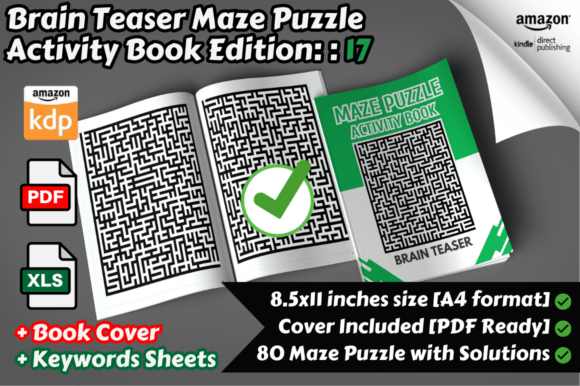
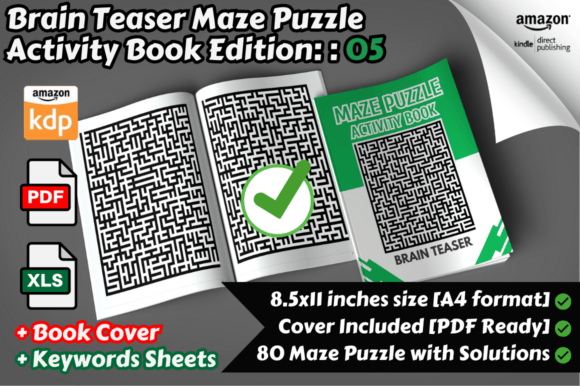
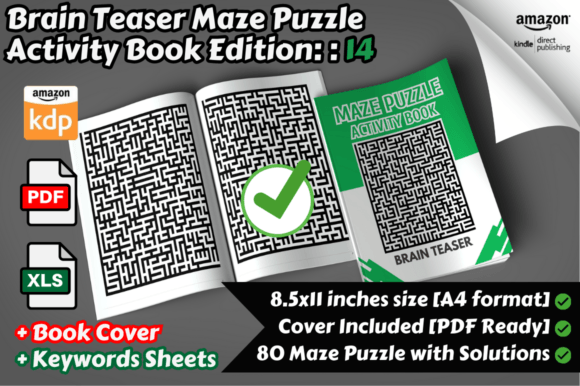
This is not a simple book of twists and turns. It is a carefully engineered brain-teasing tool, packaged as an instantly accessible PDF with 80 distinct puzzle pages and a corresponding 80-page solution section. Professionals, educators, and lifelong learners are discovering that the deliberate, quiet intensity of navigating a complex maze offers something rare: a form of active rest that restores mental clarity without digital overhead.
The Enduring Allure of the Maze in a Digital World
Why would anyone choose paper-based mazes when apps promise instant gratification? The answer lies in the quality of attention they demand. A well-designed maze requires sustained, linear focus. There is no algorithm to predict the exit, no hint button that undercuts the process. For knowledge workers who spend their days jumping between tabs, emails, and collaborative platforms, this enforced single-tasking acts as a neural palate cleanser. The Maze Puzzle Activity Book Edition 14 recognizes this and elevates the classic format with increasingly intricate designs that resist impulsive guessing.
The resurgence of analog hobbies—board games, journaling, physical puzzles—is often misread as nostalgia. In reality, it reflects a deeper understanding of how the brain recovers. Scattered attention is metabolically expensive. Immersive, low-stakes problem solving, the kind mazes provide, allows the brain's default mode network to engage in productive, quiet rumination. This is where creative professionals and entrepreneurs often stumble upon unexpected solutions to work-related problems, all while tracing a path toward a maze's center.
Inside Edition 14: Structure Meets Creative Freedom
What sets this specific edition apart is its thoughtful architecture. The book is delivered as a high-quality PDF, sized at 8.5x11 inches, which means printing is straightforward and the visual details remain crisp whether you use standard office paper or heavier stock. The decision to split the content into 80 pages of perplexing puzzles and a separate 80-page solution section is deceptively simple but brilliant. It allows users to check progress without accidentally glimpsing the answer, preserving the integrity of the challenge. This clean separation encourages persistence, a trait highly valued in both personal and professional growth.
The puzzles themselves are not monotonous variations. They offer a range of visual complexity that engages different cognitive faculties. Some mazes demand methodical, edge-hugging logic; others require spatial reasoning that feels akin to mental rotation tasks used in architectural and design thinking. The high-quality engaging designs avoid childish motifs, making the book suitable for an adult's aesthetic sensibility. They feel more like abstract art puzzles than simple children's games, which is a deliberate move to appeal to a market that values design intelligence as much as function.
Cognitive Benefits That Go Beyond Entertainment
Referring to this activity book merely as entertainment undersells its utility. Regular engagement with maze-solving correlates with improvements in several practical mental processes. When you analyze a maze, you're exercising working memory by holding potential routes in mind, strengthening executive function by planning several steps ahead, and honing visual-motor coordination by physically tracing the path. For the 20-to-50 age bracket, these are not abstract benefits. They translate directly into sharper spreadsheet analysis, more effective project planning, and a slightly faster ability to orient solutions in ambiguous business situations.
Psychologists and occupational therapists have long used maze-like exercises to assess and build planning skills and cognitive flexibility. A well-curated book like Maze Puzzle Activity Book Edition 14 brings that therapeutic structure into the home or workspace without any clinical overtones. It becomes a self-directed tool for mental maintenance. The inclusion of comprehensive solutions ensures that when a puzzle does stump you, the moment of frustration is brief. You can review the logic, learn the pattern, and apply that insight to the next challenge, transforming each solution into a micro-lesson in systematic thinking.
Practical Integration into Professional and Personal Routines
One of the strongest selling points, subtly woven into the book's design, is its portable and travel-friendly nature. Because it's a PDF, you can keep a digital copy on a tablet for long commutes, or print a few pages to toss into a laptop bag. This flexibility meets a real need for the freelancer working from a co-working space, the consultant in a hotel room, or the parent stealing 15 minutes of quiet while waiting for a child's lesson to end. Unlike a mobile game, opening this file doesn't invite notification badges or ad interruptions.
Educators are finding creative uses for such resources as well. In a classroom setting, these mazes serve as prime activities for strengthening concentration and patience. They can be used as warm-up exercises to settle a room into focused quiet, or as differentiated tasks for students who finish core work early. Because the difficulty progressively ramps, it avoids the plateau effect. The Maze Puzzle Activity Book Edition 14 becomes a reusable classroom asset; printed pages can be distributed for individual quiet time, and the solution section allows for self-checking, fostering independent learning habits.
For home learning environments, parents can merge puzzle time with conversations about strategy and logic. Asking a simple question like "What made you choose that path?" after a maze is solved builds metacognitive awareness in children and teens. For parents, tackling a more challenging puzzle alongside a teenager can subtly model persistence and the value of working through complex, non-digital problems—a powerful counterbalance to the instant-gratification norm of social media.
Challenging Friends, Family, and Self: The Social Dimension
Underscored in the book's promise is the idea that it is suitable for puzzle enthusiasts of all ages. This is not just marketing language. Mazes are one of the few activities where a 12-year-old and a 40-year-old can compete on relatively even ground, because their demands are visual-logical rather than purely knowledge-based. Edition 14 leverages this to foster intergenerational interaction. Imagine printing two copies of the same labyrinth for a grandparent and grandchild to solve simultaneously, then comparing approaches. Such moments build connection without the need for expensive software or hardware.
This social layer also appeals to team leaders looking for low-key office activities. A printed maze challenge posted in a break room, with a small prize for the fastest solution, provides a quick mental reset that a ping-pong table or a coffee break cannot. It invites a different kind of collaborative conversation: colleagues discussing dead ends over lunch, swapping strategies on how to visually track possible routes. It is an inexpensive, high-impact method to inject a little communal, brain-engaging levity into the workday.
Why a PDF Delivery Model Aligns with Modern Consumption
The choice to offer this activity book as a PDF file might initially seem utilitarian, but it reveals a keen understanding of how independent creators and small businesses now operate. A fixed physical inventory creates waste and logistical friction. A beautifully designed PDF interior file, sized perfectly for standard printing, puts control entirely in the hands of the user. You can print only the pages you want to solve, in the order you prefer, and even reprint a particularly satisfying puzzle months later to see if your solution time has improved. This model respects environmental considerations and modern expectations for immediate, frictionless access.
For professionals who use tablets with styluses, the PDF format allows for direct on-screen solving via annotation apps. This hybrid approach retains the feel of manual completion without the need for paper. The high-quality designs remain visually striking on a screen, maintaining the aesthetic appeal that makes the activity feel like a treat rather than a chore. It adapts to the user's preferred medium—digital or physical—without compromising the experience.
Sustaining Mental Edge Without Digital Burnout
A growing body of conversation around wellness emphasizes the importance of activities that induce a mild, enjoyable state of "flow" without the hyper-stimulation of digital content. Maze-solving fits this niche perfectly. The Maze Puzzle Activity Book Edition 14 offers hours of endless fun not through addictive loops, but through genuine, self-paced challenges. There is no leaderboard, no streak to maintain—only the quiet satisfaction of finding the correct corridor and circling back smarter from a dead end. This intrinsic reward structure is deeply satisfying for a demographic tired of extrinsic metrics.
Some might underestimate the patience required to solve a maze, but that patience is precisely the muscle being trained. In an era where quick clicks rule, slowing down to trace a deliberate path strengthens the brain's capacity to resist impulsivity. It feels simultaneously old-fashioned and futuristic—a low-tech tool for maintaining high cognitive performance. As automation handles more routine tasks, the human ability to visualize pathways, anticipate obstacles, and persist through non-obvious solutions becomes only more valuable.
What emerges from the entire package is a versatile, intelligently structured resource that meets a genuine contemporary need. It provides a tactile, mentally engaging break that sharpens rather than numbs. For the entrepreneur needing to clear her head between meetings, the marketer seeking to prime creative thinking, or the educator building a quiet activity library, the book delivers more than promised. It is not a passive product but an active partner in cognitive maintenance, packaged with a clarity of purpose that demonstrates careful thought behind every design choice.
Ultimately, the Maze Puzzle Activity Book Edition 14 stands as a quiet statement about the value of unplugged concentration. It reminds us that some of the most effective tools for sharpening the mind require no batteries, no updates, and no subscriptions—just a bit of curiosity, a steady hand, and the willingness to occasionally wander into a dead end before finding the way forward.