Steady Steps Forward: A Parent’s Experience Using an Autism Planner Log Book to Track Daily Growth
When a family first receives an autism diagnosis for their child, the journey ahead can feel like stepping onto a path lit only by a flickering flashlight. Parents quickly learn that meaningful progress often hides in the small moments—a new word attempted, a successful transition, a sensory breakthrough—and capturing those moments becomes essential. This is where the concept of a dedicated Autism Planner Log Book transforms from a simple notebook into a quiet anchor for the entire household. Rather than relying on scattered notes on phones or memory alone, caregivers are discovering that structured daily tracking paints a clearer, more compassionate picture of their child’s development over weeks and months.
Unlike generic journals, an Autism Progress Planner Tracker acknowledges that autism support is rarely linear. It provides a space where parents can record not only achievements but also fluctuations in mood, sensory sensitivities, communication attempts, and behavioral patterns. The beauty of this approach lies in its simplicity: a per-day format that asks only for what matters most, without becoming another overwhelming chore. For the beautiful, special person with autism in someone’s life, the act of consistent observation often deepens the parent’s intuition, helping them notice triggers and triumphs they might otherwise miss.
Why a Structured Daily Log Matters More Than You Think
The first few years after a diagnosis are often packed with therapy appointments, school meetings, and at-home interventions. Data gets shared in professional reports, but the raw, day-to-day texture of a child’s experience rarely makes it onto those pages. A log book designed specifically for autism bridges that gap. It becomes a central repository not only for therapy notes but for the texture of a Tuesday afternoon: how long it took to settle after a loud noise, which food was refused and why, the surprising moment when eye contact was held during a favorite song. Over time, these entries form a tangible narrative that professionals can use to fine-tune strategies, and parents can revisit to see just how far their child has come.
From an E-E-A-T perspective, expertise in autism care consistently emphasizes the value of caregiver-collected data. Pediatric neurologists and behavior analysts often recommend daily logs because they reduce recall bias—a parent’s memory may emphasize the hardest moments, whereas a written record reveals patterns of resilience. A well-organized Autism Planner Log Book supports this by offering simple tracking fields that are intuitive enough to fill out even at the end of an exhausting day. This reduces the barrier to consistent use, which is the single biggest predictor of whether a tracking system will actually help.
Who Benefits Most from an Autism Progress Planner Tracker
While the primary user is often a parent or grandparent, the ripple effect touches many people in the child’s life. Here’s how different individuals tap into the same log book for distinct purposes:
- Primary caregivers: Use it to track daily routines, sleep, eating habits, and communication attempts, building a reliable reference for pediatrician visits.
- Therapists and educators: Review shared pages before sessions to understand what happened between appointments, allowing them to adapt goals in real time.
- Co-parents and extended family: Stay aligned on strategies and celebrate subtle improvements they might not witness firsthand.
- The child (eventually): Older children or teens may look back at these records with a caregiver to understand their own growth story, fostering self-awareness.
The Autism Planner Log Book particularly shines in co-parenting situations where a child splits time between two homes. Consistency often fractures during transitions, but a log that travels with the child keeps everyone accountable to the same observations. When Mom notes that a bath before bedtime reduced stimming on her nights, Dad can try the same sequence and add his own observations. This kind of collaborative documentation turns potential friction into a shared language of care.
Unpacking the Physical Design: Why Dimensions and Durability Matter
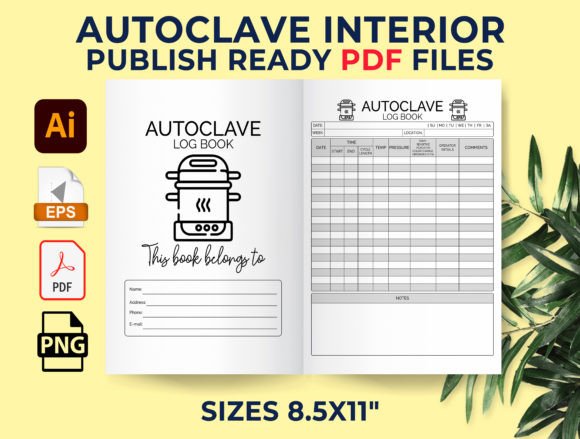
At first glance, an 8.5" x 11" page might seem like a minor detail, but its generosity serves a real purpose. Smaller notebooks often force rushed, cramped handwriting, whereas the larger format gives room to breathe—especially important when a parent wants to jot down a detailed anecdote about a meltdown or a breakthrough. The 120 pages provide enough space for roughly four months of daily entries, a timeframe that aligns well with typical therapy review cycles. Because the design includes a no bleed layout, even heavy pen pressure won’t mar the next page, preserving readability.
For those who choose the print-ready PDF version, the 300 DPI high resolution ensures that every line and header prints crisply, whether at home or through a professional service. The availability of multiple file formats—PDF, AI, EPS, and PNG—means users can customize their book before printing, adding or deleting pages to match their child’s unique schedule. A family might add extra speech therapy tracking sheets or remove a section that doesn’t apply. This flexibility respects the reality that no two autism journeys look identical. An intro page sets a calm, intentional tone, inviting the caregiver to write the child’s name, important contacts, and perhaps a grounding affirmation before the daily work begins.
A Deeper Look Inside the Per-Day Format
What distinguishes a purpose-built autism log from a blank notebook is the careful balance between structure and freedom. Each day typically includes fields that prompt a parent to record:
- Mood and energy levels upon waking and throughout the day
- Specific communication attempts—verbal, signing, picture exchange, or device-based
- Sensory experiences that stood out, positive or overwhelming
- Meals eaten and any unusual reactions
- Therapies attended and a quick note on engagement
- Sleep quality from the previous night
Alongside these prompts sits generous space for writing notes, where the real story unfolds. Perhaps the child hummed a new tune, or the family discovered that a weighted lap pad helped during car rides. These seemingly small anecdotes often hold the keys to understanding larger patterns. A simple tracking system reduces the intimidation factor; a parent doesn’t need to craft perfect sentences, just capture the essence. Over time, this practice becomes second nature, taking under five minutes in the evening but yielding insights that a rushed mental recap would never retain.
How Professionals Interpret the Data You Collect
For a behavior analyst or speech therapist, raw data is most useful when it’s consistent and contextual. Seeing that a child communicated “more” three times during snack on a Wednesday is helpful; knowing that it happened after a full night’s sleep and on a day when tactile sensitivities were low is transformative. The Autism Progress Planner Tracker eliminates the need for parents to remember all those variables during a rushed consultation. Instead, they can hand over the open page and say, “Here’s what our weeks actually looked like.” This practice strengthens the therapeutic alliance because it positions the parent as an expert observer of their own child—a role that builds confidence and reduces the sense of helplessness that sometimes accompanies the diagnostic process.
Many professionals also use these logs to identify antecedents that a single clinical observation might miss. A child who remains calm during a 45-minute session but melts down every evening at 5 p.m. could be reacting to cumulative sensory overload. Without daily records, that pattern might take months to surface. The log book acts as a detective’s notebook, piecing together clues that lead to practical solutions: a quiet space after school, a visual timer for transitions, or a change in dinner routine.
Customization Without Complexity: Making the Book Your Own
The mention of “you can add or delete as much as you want” points to a feature that printed journals rarely offer. Because this planner comes in editable formats, caregivers can tailor it to their child’s age, support level, and personal interests. A preschooler’s log might emphasize play skills and sensory exploration, while a teenager’s version could track self-advocacy attempts, homework completion, and social interactions. The unique design elements are crafted to be visually calming, avoiding the distracting clutter that can make a page feel like a chore. Subtle lines, thoughtful spacing, and a clear hierarchy help the eye land on the most important information first.
For those who prefer a digital approach on a tablet with a stylus, PNG and PDF files overwrite the need for a physical stack of notebooks moving forward. This adaptability matters for families who travel frequently or want to back up records securely. And because the product has been KDP tested with no error, parents who do wish to order a professionally bound copy through Amazon can do so knowing the formatting will translate seamlessly—no cut-off margins or blurry text.
Building a Habit of Gentle Observation
One of the underappreciated gifts of an Autism Planner Log Book is the way it shapes the observer. When a parent sits down each evening to record the day, they’re engaged in a quiet act of reflection that often shifts their perspective. Instead of ending the day focused on what went wrong, they begin to notice what went right. A notation like “made eye contact while laughing at the bubbles” becomes a small treasure that reframes the entire day. Over time, this practice cultivates resilience and gratitude, which are protective factors against caregiver burnout.
Children also respond to being observed with kindness rather than scrutiny. A log that celebrates progress, no matter how incremental, reinforces a strengths-based approach. This aligns with contemporary autism advocacy, which encourages seeing autistic traits as differences to be understood rather than deficits to be erased. The space for writing notes invites praise alongside data: “He tried the new texture! So proud” carries emotional weight that a checkbox alone cannot convey.
Choosing Between Pre-Printed and Digital Workflows
Families often wonder whether a physical book or a PDF used on a tablet works better. There is no universal answer, but the availability of both options removes a barrier. A parent who loves the tactile feel of pen on paper can print the 120 pages and keep the journal on the kitchen counter. Another who prefers the portability of an iPad can use a stylus to fill in fields directly on the high-resolution file. Some even prefer a hybrid: print a month at a time, use the digital copy as a backup, and never worry about losing irreplaceable notes. The high-quality print ready PDF ensures that whether you choose to print at home or order a bound copy, the result always looks professional and easy to read.
Common Pitfalls in Daily Tracking and How This Planner Avoids Them
Without guidance, well-meaning parents can fall into tracking traps that reduce the usefulness of their efforts. One common mistake is tracking too many things, which leads to abandonment. The minimalist per-day format of this log keeps the focus on core areas, preventing data fatigue. Another pitfall is only recording challenges, which can skew a parent’s perception toward negativity. The layout encourages balance by including space for what brought joy or connection. Finally, inconsistency—skipping several days and then trying to reconstruct them—erodes reliability. The simple tracking design respects a caregiver’s limited time, making it more likely they’ll stick with the practice even on difficult days.
From Daily Notes to Long-Term Insights
The real magic unfolds when a parent stacks three months of filled pages together and flips through them. Patterns emerge like a photograph developing in a darkroom: maybe communication spikes on days after occupational therapy, or sleep disturbances cluster around full moons or schedule changes. This longitudinal view is something that a thirty-minute doctor’s visit can never replicate. Armed with this self-made evidence, parents walk into IEP meetings and medical appointments not as supplicants but as equal partners, ready to advocate with data that speaks louder than general impressions.
For the child, this archive becomes a piece of their life story. Years later, a parent might pull out the Autism Progress Planner Tracker from when the child was four and show them how they learned to self-regulate using a favorite song. That act of storytelling can strengthen identity and self-esteem, reinforcing that their journey was honored and witnessed with love. It also provides concrete proof of growth for the times when progress feels invisible—a common experience in any long-term caregiving role.
The thoughtful combination of dimensions 8.5" x 11" inches, a generous 120 pages, and flexible file types means this tool is meant to be used, not stored on a shelf. It’s rugged enough for a diaper bag yet elegant enough to pull out during a consultation. As more families recognize that consistent, compassionate documentation can be a form of advocacy in itself, the quiet power of a well-designed log book continues to resonate in homes everywhere.