Animal Profile Log Book
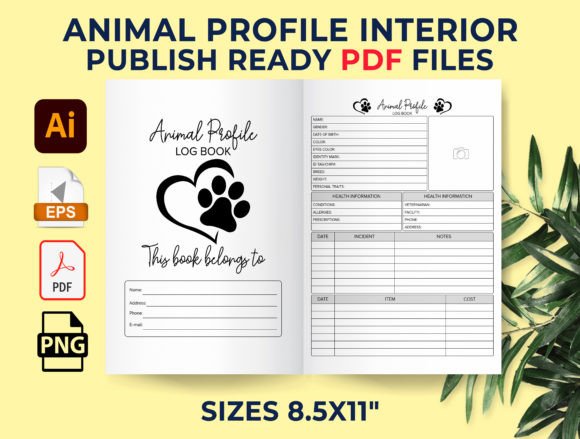
Most people who care for animals start with good intentions—tracking feed, noticing a limp, remembering which ewe had trouble lambing last spring. But memory is unreliable. Scattered notes on scraps of paper or digital apps that never get opened create a patchwork of information no one can use when it matters. The Animal Profile Log Book shifts that reactive scramble into a deliberate system. It’s not just a notebook. It’s a structured, high-clarity tool that gives you a per-animal command center: 120 pages in a generously sized 8.5” x 11” format, with a no-bleed layout, a clean intro page, and a unique design that stays out of your way while keeping records sharp.
Whether you manage a small hobby herd of Nigerian Dwarf goats, a backyard rabbitry, a few performance horses, or a mixed flock of sheep and cows, the decision to record deliberately will change how you make feeding, breeding, health, and culling choices. This article isn’t about selling you a log book. It’s about understanding why the way you document an animal’s life becomes a strategic lever—and how to use this particular tool without drowning in unnecessary data.
Why Casual Tracking Fails and Intentional Profiles Win
The most common mistake in animal management is recording only emergencies. By the time a problem shows up in a frantic note, the early signals have passed. A cow that drops in milk production over three weeks tells a story a sudden crisis note never captures. With the Animal Profile Log Book, you build a profile that contains more than treatment logs. You include temperament notes, weight shifts, hoof trimming dates, breeding exposures, feed changes, and those small behavioral quirks that often precede clinical signs. The per-day format doesn’t force you to fill every line, but it keeps the option open. Over time, a profile becomes a diagnostic partner, not just a diary.
Think about positioning. A farm that sells registered breeding stock can provide a buyer with a complete profile—not a vague promise of good genetics. That transparency builds trust and often commands a higher price. For a pet owner, the log book supports consistent communication with a veterinarian, eliminating the “I think she stopped eating on Tuesday” ambiguity. The strategic value lies in moving from reactive caretaker to proactive steward.
What the Animal Profile Log Book Brings to the Table
Before you fill a single page, it’s worth understanding the physical design of this tool because structure shapes behavior. A cramped 6” x 9” journal invites you to write less. The Animal Profile Log Book gives you a full letter-size sheet. That extra real estate matters when you’re noting down a complicated kidding, tracking a horse’s recovery from laminitis, or sketching a quick diagram of a sheep’s tooth wear. The 300 DPI high-resolution print-ready interior means the pages you replicate or scan will stay crisp—useful if you ever need to share records with a specialist or print a clean copy for a client file.
Other practical design choices: no bleed pages keep writing from getting lost in a gutter or trimmed edge. The intro page lets you set up each animal’s baseline data—name, ID, breed, date of birth, microchip or tag number, and any initial notes that define the starting point. From there, the per-day format is flexible. You can log daily or skip days, summarize weekly observations, or dedicate certain sections to breeding versus medical notes. The dedicated space for notes at the end of each profile section (or integrated, depending on how you structure it) means you never have to choose between keeping a chart and writing a meaningful observation.
The file package itself—PDF, AI, EPS, and PNG—has been KDP tested with no errors, so if you choose to print and bind multiple copies for different animals or species, you can do so without troubleshooting layout quirks. But the real power isn’t in the format. It’s in how you decide to use it.
Building Profiles That Drive Smarter Decisions
Start each profile by identifying your primary goal for that animal. Not every animal needs the same depth of record. A pet rabbit might only need weight monitoring, diet changes, and nail trims, while a working cattle dog or a high-value breeding stallion deserves a much richer profile. The Animal Profile Log Book allows you to allocate pages proportionally—you might fill ten pages in a month for a cow with a chronic condition, and a single page in six months for a low-maintenance sheep. The flexibility prevents the log from becoming a chore.
One breeder I know uses color-coded sticky tabs to mark sections within the book for different species: blue for goats, green for sheep, red for horses. Another rancher dedicates each book to one species and uses the intro page for farm-wide vaccination dates. The no-bleed design ensures that ink from markers doesn’t bleed through and obscure notes on the reverse side, which is critical when you write with a heavy hand or use a fountain pen.
For planning purposes, consider pairing the log book with a simple calendar sync. At the back of an animal’s profile, jot down reminders: “Check udder health 2 weeks pre-kidding,” or “Schedule dental float for gelding in March.” Those prompts turn the profile from a passive record into an active management schedule.
Daily Tracking as a Strategic Habit, Not a Bureaucratic Burden
The per-day format can feel intimidating if you imagine filling each line dutifully like a ship’s log. That’s not the intent. Instead, treat the daily space as an invitation to capture deviations from normal. A rabbit profile might see three days of blanks, then a note: “Slightly reduced water intake, droppings smaller but formed. Monitoring.” That single line typed or handwritten acts as a flag. Without it, you might not notice a subtle gut slowdown until stasis sets in.
This approach strengthens what consultants call operational situational awareness. In a dairy operation, tracking daily milk yields per cow in the log book, even without sophisticated software, helps you see production curves and identify cows slipping early. The notes section lets you annotate variables: “Baler noise all morning, herd restless” or “Changed hay supplier—3 cows left some morning feed.” Those contextual notes prevent you from misattributing a production dip to a health issue when it was environmental.
The Animal Profile Log Book works for this because the 120-page count gives you enough room to profile multiple animals without turning into a heavy, unwieldy binder. A single book might nicely cover ten to fifteen individual animals with detailed records, or many more if you keep entries brief. The intro page helps you index which page ranges belong to which animal, so you never have to hunt.
From Notes to Insights: Using Blank Space to Capture What Matters
The space for writing notes is often where the most profound insights emerge. When you free-write after a vet visit, you capture dosages but also the vet’s tone: “Recommended recheck in 10 days if no improvement; mentioned possible allergy to alfalfa.” That kind of nuance disappears in a checkbox form. Similarly, a goat breeder might note, “Kids from this doe always stand and nurse faster than from our other line—consider selecting for mothering ability.” These marginal observations compound over months into a knowledge base no app can replicate because it’s built on your specific context.
Be deliberate about using the notes space. Avoid the trap of rewriting the daily field in prose. Instead, use it for synthesis: quarterly summaries, breeding outcome analyses, or reflections on a new feed regimen. For a horse trainer, the notes section might capture “First ride after four weeks of groundwork—soft, responsive, less brace than I expected. Keep sessions under 20 minutes until fitness builds.” That’s gold for planning the next six weeks of training.
Practical Use Cases Across Different Contexts
The Animal Profile Log Book doesn’t prescribe a single method. Its value emerges in context:
- Small-scale rabbit breeders can track kindling dates, litter sizes, growth rates, and genetic pairings. The 8.5” x 11” sheet holds a simple chart alongside notes on nest box behavior, preventing the common mistake of repeating a cross that consistently produces poor mothering.
- Sheep and goat producers benefit from detailed lambing and kidding logs: birth weight, ease of delivery, colostrum intake within the first hour, dam’s udder score. Over seasons, patterns emerge. A ewe that always twinned but last year gave a single might need nutritional review.
- Cattle operations can use the profile for individual cow cards—breeding dates, observed heats, pregnancy check results, and weaning weights. The notes section might hold body condition scores across seasons, helping decide which females remain in the breeding herd.
- Horse owners will find the per-day format essential for injury rehabilitation, worming schedules, and farrier cycles. The crisp 300 DPI resolution ensures hoof diagrams or teeth charts photocopy cleanly for a new owner or a travel file.
- Mixed animal hobby farms can maintain a single bound book with dividers. The intro page for each animal section serves as a quick-reference ID card, and the no-bleed design keeps ink from migrating onto an adjacent profile.
- Pet owners managing chronic conditions—a dog with epilepsy, a cat with IBD—gain a reliable communication tool for vet visits. The vet can flip through weeks of notes in seconds instead of listening to a rushed summary.
Avoiding the Data Trap: When Logging Becomes a Distraction
Every tool carries the risk of misapplication. A Animal Profile Log Book can become a performance act where you spend more time recording than observing. If you find yourself trying to fill every line because the format exists, step back. The book serves the animals, not the other way around. Start with a focused hypothesis: “I’m tracking feed intake for 14 days to see if the new mineral changes consumption.” Then pause and evaluate. Documentation without a clear question often turns into noise that clutters future decisions.
Another risk is isolating the log book from daily routines. If it sits on a shelf while you’re in the barn or stable, it won’t get used. Keep a pen attached to the book. Place it near the feed storage or the grooming area. The physical size works in your favor—8.5” x 11” won’t slip behind a shelf unnoticed. Some keep it in a waterproof sleeve during wet seasons and transfer it back indoors for writing.
Don’t let perfectionism creep in. A messy note about a sheep’s lameness taken with mud on your hands is worth ten times an immaculate entry you delayed until evening and half-forgot. The Animal Profile Log Book is designed for real-world conditions, not a sterile office.
Deciding When to Start and What to Prioritize
You don’t need to begin on January 1st or when a new animal arrives. Start today with the animal that needs the most attention. Identify three data points that will inform your next decision. For a horse prone to colic, those might be appetite, water intake, and manure consistency. For a dairy goat, morning and evening milk weight, plus any grain refusal. Write those at the top of the profile page as your minimum viable tracking set.
Build a simple code or shorthand if that speeds you up—using symbols for common observations reduces friction. One sheep farmer uses a triangle for “isolated from flock,” a star for “checked feet,” and a horizontal line for “nothing of note.” These personal shortcuts make the log book faster to fill without losing clarity when you review.
Consider reviewing profiles as a weekly ritual. Sunday evening, spend fifteen minutes flipping through and noticing trends. That ritual turns a collection of individual data points into a strategic overview: “Two does are due in three weeks; all three yearlings gained weight this month; the older horse’s cough hasn’t improved—book a recheck.”
Long-Term Value Beyond Daily Operations
The greatest payoff of the Animal Profile Log Book appears months and years later. When a buyer asks why your cattle haven’t had foot rot in three seasons, you can show the trace mineral record and the paddock rotation notes that explain your management, not just claim it. If you need to sell an animal due to unexpected life changes, the profile reassures the new owner and can justify a asking price that reflects documented care.
For breeding programs, the log book becomes a genetic selection tool. You stop guessing which gilt produced the fastest-growing piglets; the data is there. The per-day format might show that a certain goat line always kids a day early with text-book deliveries. That’s actionable intelligence that improves the herd over generations.
Even in a purely companion-animal context, the profile book becomes a priceless archive. When a beloved dog develops cognitive decline, being able to look back at a timeline of symptom progression helps you make compassionate end-of-life choices with your vet, grounded in evidence rather than emotional blur.
Integrating the Tool Without Overcomplicating Your Operation
The Animal Profile Log Book doesn’t demand you overhaul your routines. It works alongside ear tags, tattoo numbers, digital spreadsheets, and chalkboards. Many managers use the physical book for real-time barn notes, then transfer summarized data into a digital health management system weekly. The high-quality PDF file means you can print fresh pages as needed without buying a new book; the AI and EPS files allow you to customize a section header if you want to repurpose the design for a very specific use, like a full equine veterinary emergency card.
Make the book visible and accessible. When staff, family members, or farm sitters can write in it easily, you reduce the chance that critical information gets lost in a text message thread. Train everyone to note the date, the animal ID, and a concise observation. The unique design keeps the layout clean enough that even messy handwriting remains scannable.
Ultimately, the decision to use such a log book is a commitment to paying a different kind of attention. It’s a quiet mindset shift that says: the small, daily details compound into a body of knowledge that protects your animals, strengthens your reputation, and makes the complex work of animal care more mentally manageable. The tool itself—the dimensions, the paper, the per-day structure—is just the container. What you pour into it, with clarity and purpose, becomes the real asset.