Nurikabe Puzzle Book for KDP Part 03: The Mindful Logic Escape Modern Adults Need
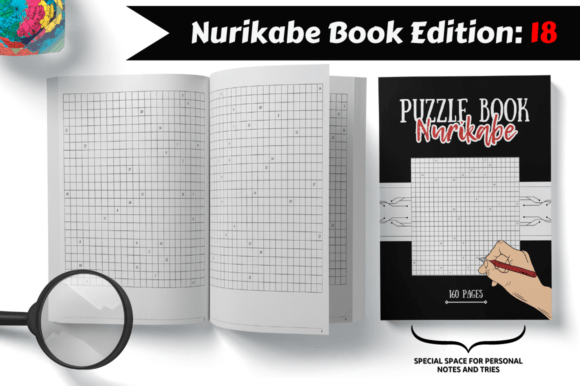
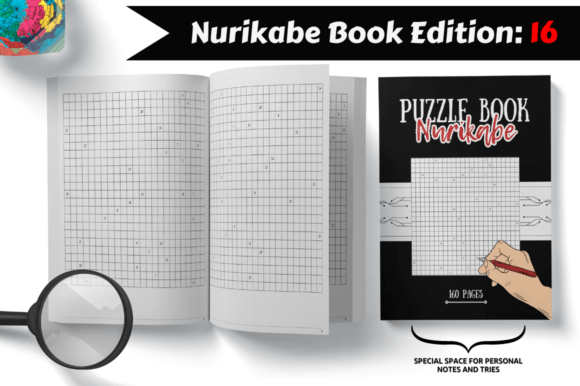
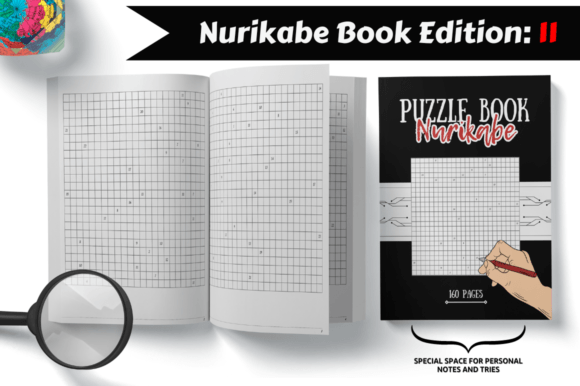
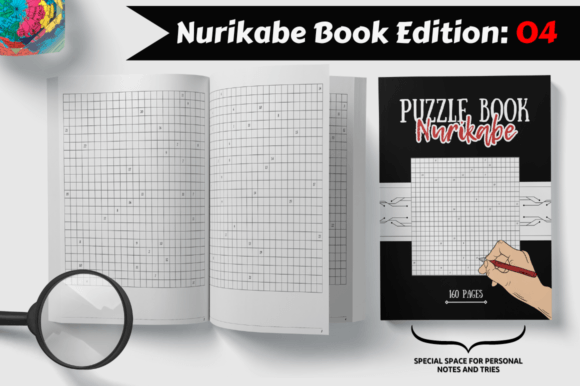
There is a quiet shift happening in how busy professionals recharge. Rather than reaching for another endless scroll on a smartphone, a growing number of people are rediscovering the deep, focused satisfaction of a pen-and-paper puzzle. At the center of this movement sits a wonderfully understated Japanese logic challenge. The Nurikabe Puzzle Book for KDP Part 03 is not simply another collection of grids; it represents a tangible tool for cognitive clarity, carefully designed for the self-publishing marketplace. It merges an ancient sense of play with the precision of modern on-demand production, responding to a clear demand for screen-free mental stimulation that fits into a sleek, 8.5x11-inch format.
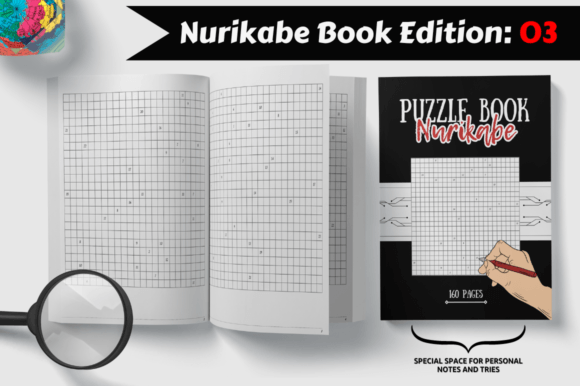
This isn't about nostalgic novelty. It’s about a pragmatic recognition that our attention is fragmented. Nurikabe, with its simple rules that hide profound complexity, forces a singular, meditative focus. For the self-publisher, creator, or puzzle enthusiast looking to understand *why* a resource like this resonates so strongly right now, examining the contents of this specific release reveals a blueprint for meeting the moment. Inside, the careful architecture of 160 pages—split evenly between challenges and solutions—reflects a deep respect for the solver’s journey, eliminating the frustration of getting lost without a guide.
The Quiet Power of a Streamlined Logic Container
Nurikabe puzzles operate on a deceptively simple principle: determine which cells are "islands" (white) and which are the "stream" (black), creating a continuous wall that never forms a 2x2 square while respecting numeric clues. It is a rule set that takes two minutes to learn but offers a lifetime of nuance. The Nurikabe Puzzle Book for KDP Part 03 capitalizes on this low barrier to entry while providing a scalable difficulty arc that keeps the brain from plateauing. For the modern reader, this balance is critical. We crave activities that provide an immediate sense of achievement without being childish, yet demand enough rigor to genuinely disconnect us from background noise.
Within the landscape of digital wellness, the appeal of a physical or printable PDF puzzle interior lies in its finality. A grid filled in ink is a closed loop. In an era of infinite inboxes and non-stop notifications, closure has become a luxury. The design of this volume, with its clean interior layout and clearly separated solution pages at the back, fosters an uninterrupted flow state. It caters not just to the seasoned puzzle solver, but to the graphic designer, marketer, or entrepreneur who needs to reset their analytical engine between meetings, using a non-digital medium to lubricate creative thinking.
- Rule Clarity: The core mechanics are easy to grasp within minutes, making the book accessible to beginners while still challenging veterans.
- Digital Detox: Engaging with a printed page or a static PDF breaks the cycle of doom-scrolling, reducing eye strain and mental fatigue.
- Incremental Challenge: A thoughtfully curated set of 80 puzzles ensures a smooth progression, preventing the common "difficulty cliff" found in generic puzzle books.
Inside the Package: Precision Content for a Distracted Market
When we talk about market preferences shifting toward value, we’re often describing a desire for "frictionless utility." That is exactly what the core offering of this KDP resource provides. The primary asset is an 8.5x11-inch PDF interior file, universally recognized as the standard for print-on-demand. The structure is ruthlessly efficient: 80 pages of meticulously crafted puzzles, followed immediately by 80 pages of solutions. This isn't just a product; it’s a respecter of time. No flipping to the very end of a thick book, no losing a separate solution sheet. The layout acknowledges that the modern planner, educator, or hobbyist values a well-organized workflow above all else.
To elevate the package from a simple puzzle compilation to a market-ready product, the inclusion of a professionally designed PDF cover file and an Excel keyword spreadsheet is significant. The cover sets the psychological tone, signaling that this is a serious, immersive activity, not a throwaway distraction. Meanwhile, the keyword spreadsheet directly addresses the business needs of a KDP publisher. It bypasses the guesswork of Amazon's algorithm, offering a practical springboard for listing optimization. This blend of creative content and hard-nosed publishing utility makes the volume a compelling case study in modern self-publishing strategy.
Beyond the technical assets, the content philosophy is clear: this is a volume designed for a seamless experience. The instructions are integrated in a way that doesn't patronize the expert but doesn't abandon the newcomer. This is a fine line to walk, and it’s one of the primary reasons a resource like this stands out in a crowded marketplace. It is a direct answer to the user expectation that premium digital products should "just work."
- Download the high-resolution PDF interior, formatted perfectly for bleed and standard print dimensions.
- Access the solution pages immediately following the puzzles to check logic or bypass a frustrating logic lock.
- Utilize the provided Excel spreadsheet of keywords to craft an optimized title, bullet points, and description on Amazon KDP.
- Attach the striking cover file to finalize a professional-grade listing in minutes, not hours.
Why Print-on-Demand Logic Puzzles Are Surging in Creative Workflows
The shift toward low-content and medium-content book publishing is not slowing down; it’s maturing. The Nurikabe Puzzle Book for KDP Part 03 sits in a sweet spot where "evergreen" content meets "low inventory risk." For the business owner or freelancer building a passive income portfolio, a logic puzzle book requires no complex narrative maintenance, no character arcs, and no writer's block—just a reliable, structured mental challenge that people actively seek out. The trend is moving away from entirely blank journals and toward guided meditations for the brain. Nurikabe satisfies this perfectly because it gently guides the mind toward a single, solvable truth.
There is also an emerging dialogue about how logic puzzles integrate into modern professional development. Educators are using grid-based puzzles to teach deductive reasoning in a tangible way. Tech professionals, exhausted by complex code, are using paper puzzles to debug their own thought processes. The high-quality layout found in this collection is ideal for these secondary use cases. An educator can print a select page for a classroom exercise; a manager can include a puzzle in a brainstorming kit. The 8.5x11in size ensures that the grids are large enough for annotations, making this more of a logic workspace than a tiny pocket book.
- Creative Resets: Writers and designers use Nurikabe to overcome creative blocks, engaging a different part of the brain to refresh imaginative thinking.
- Algorithmic Thinking: Solving these puzzles mimics the process of tracing code logic, making it an ideal analog break for developers and data analysts.
- Collaborative Competition: The format is perfect for team-building or friendly rivalry, where speed and logic precision are celebrated in a low-stakes environment.
Evolving from Simple Distraction to Intentional Cognitive Maintenance
People are paying more attention to puzzle books because the conversation around mental fitness has finally caught up with physical fitness. We train our bodies with the best equipment we can afford; increasingly, we want the same rigor for our minds. Nurikabe forces the solver to balance positive and negative space, a spatial reasoning skill that directly translates to fields like architecture, UX design, and engineering. Rather than offering a mindless dopamine hit, the puzzles in this volume demand structural thinking. You must build the "stream" carefully, understanding that a single black cell in the wrong place ruins the connectivity of the whole wall.
This meticulousness is what separates a generic puzzle from a curated collection. The Nurikabe Puzzle Book for KDP Part 03 provides a structured path for this cognitive maintenance. It’s a practical tool for those who understand that staying sharp is a daily practice, akin to brushing your teeth. The inclusion of 80 distinct challenges means there is enough material to form a habit. You can tackle one puzzle with your morning coffee, using the easy-to-read layout to warm up your brain, building a resilient mental framework before diving into the chaos of emails and strategy calls.
Observing this content, it becomes clear that the value proposition is not just "fun." It’s about self-mastery. The backward glance at the solution pages is never a failure; it’s a tutorial. It shows you where your spatial reasoning collapsed, teaching you the visual grammar of the puzzle. This iterative learning loop is what keeps retention high and makes a book like this a keepsake rather than a disposable activity pad.
Optimizing Discovery and Delivery in a Shifting Digital Marketplace
From a practical marketing perspective, the packaging of this product is as instructive as the content itself. The Excel spreadsheet of keywords is an acknowledgment that a great product only succeeds if it is seen. It shifts the user’s role from pure creator to savvy publisher. Terms related to logic puzzles, brain teasers for adults, stress relief, and Japanese puzzle books are gold dust on the KDP platform. By providing these, the resource helps the user align with the search intent of a burned-out professional searching for "quiet mind activities" or "non-digital games." This forward-looking approach turns a simple PDF into a ready-to-launch business asset.
The technical specifications also reflect a deep understanding of current user expectations for slice-of-life products. The 8.5x11-inch format is not arbitrary; it is the most forgiving print size for margin and bleed management. The emphasis on "pure puzzle fun" and "clear instructions" in the promotional framing counters the common complaint in the puzzle community about cramped, confusing layouts. For the everyday reader or the gift-giver looking for a thoughtful Mother’s Day or Father’s Day present, the professional finish suggested by the cover file and layout elevates the item from a printout to a substantial, warm gift. It feels substantial, a physical anchor in a virtual world.
Ultimately, the journey through a Nurikabe grid is a metaphor for the ideal modern workflow: you start with a blank, vaguely intimidating space; you identify your key constraints (the numbered islands); and you systematically block out the noise (the continuous wall) to reveal a clean, elegant solution. This Nurikabe Puzzle Book for KDP Part 03, with its generous 160 pages of balanced content, bridges the gap between the ancient art of logic and the contemporary need for structured tranquility. It asks for nothing but a pencil and an engaged mind, rewarding the solver with the rare gift of silence in a loud world, while giving the publisher a turnkey asset designed for seamless audience connection.