Mine Finder Puzzle Book for KDP Part 18
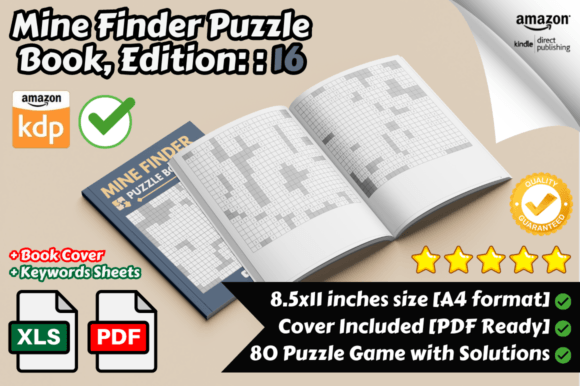
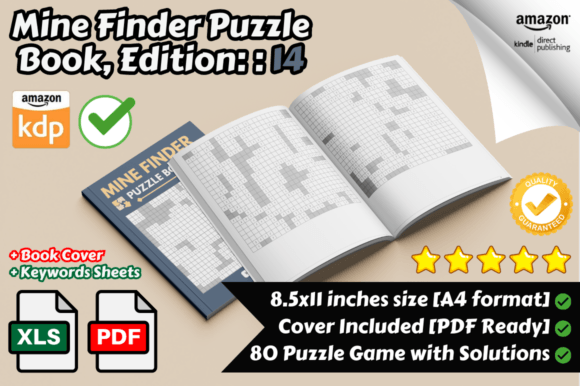
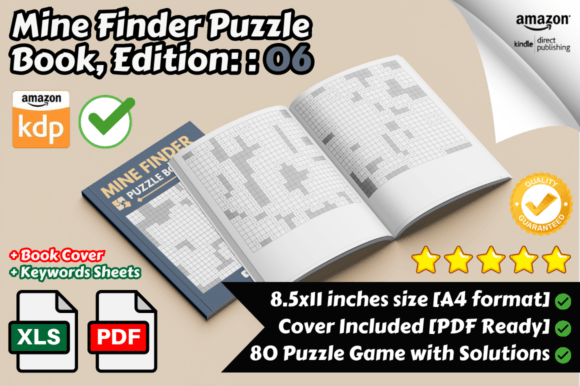
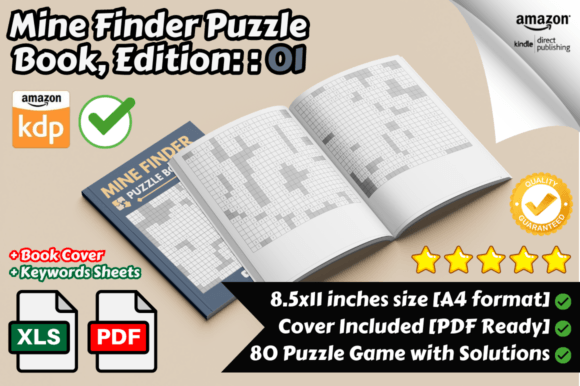
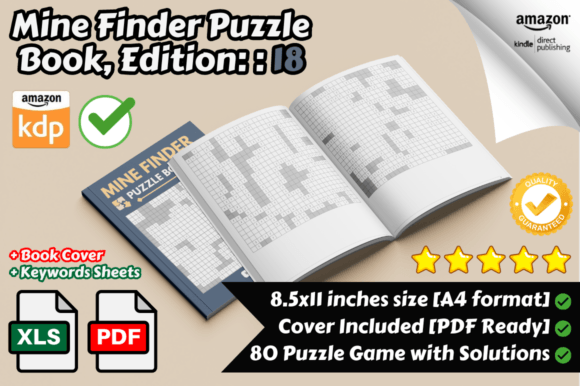
The eighteenth volume in a proven series of puzzle book interiors, Mine Finder Puzzle Book for KDP Part 18 gives self-publishers, educators, and creative entrepreneurs a ready-to-upload solution that bridges entertainment and mental exercise. Inside the downloadable package you get a 160‑page PDF interior in standard 8.5×11 inches, with 80 unique Mine Finder grids and another 80 pages of clear solutions. A polished PDF cover file and a set of Excel spreadsheets filled with search‑optimized keywords complete the bundle, so you spend less time formatting and more time connecting with your audience.
Think of this not just as a puzzle book, but as a flexible creative asset. Whether you want to launch a low‑content book on Amazon KDP, build an email list through a free downloadable challenge, or design a branded brain‑training tool, the foundation is already laid out for you. The following ideas unpack how different users can adapt Part 18 for distinct goals, formats, and audiences—while keeping the final product clear, effective, and unmistakably original.
Unpacking the Value Inside Part 18
The core of this product is a meticulously formatted PDF interior. Instead of building grid after grid from scratch, you receive 80 progressively designed puzzles that test logic, spatial reasoning, and deduction. Each puzzle resembles the classic “minesweeper” concept: numbers on the grid hint at the location of hidden mines, and the solver must mark them without triggering a misstep. Solutions are organized back‑to‑back, making the book intuitive for both casual solvers and puzzle enthusiasts who hate flipping pages searching for an answer key.
What truly sets Mine Finder Puzzle Book for KDP Part 18 apart is the accompanying Excel spreadsheet. It contains over a thousand long‑tail and short‑tail keywords researched for the puzzle and brain‑teaser niche on Amazon. This turns a simple interior file into a full‑stack publishing kit: you get the product and the discoverability engine in one download. Small adjustments to the metadata, guided by those keywords, can dramatically improve how potential buyers find your book in a crowded marketplace.
Creative Applications Across Different User Goals
A single puzzle book interior can serve wildly different purposes depending on who picks it up. Below are concrete ways publishers, marketers, educators, and small business owners can shape Part 18 into something that feels custom‑built for their audience.
Transform It into a High‑Converting Lead Magnet
Marketers and bloggers often need a tangible freebie to grow an email list. Instead of offering yet another PDF checklist, rebrand the first 10 puzzles as a “5‑Day Logic Refresh Challenge.” Remove the solution section for those pages, add a short introduction with your brand voice, and gate the full version behind a sign‑up form. Because Mine Finder puzzles are universally appealing, the opt‑in rate tends to outperform generic industry reports. Once a subscriber finishes the sampler, you can promote the complete 160‑page book—or Part 19 when it launches—as a seamless upsell.
Craft an Educational Resource for All Ages
Teachers, tutors, and homeschooling parents can repurpose the grids as classroom activities. The logical deduction required mirrors early coding thinking, pattern recognition, and systematic problem‑solving. Remove the answer pages and print individual puzzles as laminated task cards or digital assignments in platforms like Google Slides. The 8.5×11 format already matches standard letter paper, so no resizing is needed. For added engagement, pair the Mine Finder activity with a short journal prompt: “Explain your strategy for avoiding the mines.” This turns a static puzzle into a cross‑curricular exercise that reinforces written communication and metacognition.
Develop a Branded Brain‑Training Series
Self‑published authors who already sell journals, planners, or activity books can use Part 18 as the 18th installment in a cohesive line. Keep the cover design consistent by swapping only the volume number and a single accent color in the provided PDF cover file. This visual continuity trains customers to recognize your series at a glance on Amazon search result pages. Inside the book, add a simple “About the Author” page with a link to your other puzzle books or a free download. The keyword spreadsheets also update each volume’s discoverability, so installment after installment climbs the algorithm together rather than competing.
Offer an Exclusive Perk for Members or Clients
Freelancers, coaches, and small business owners with a membership community often look for low‑cost yet high‑value bonuses. The Part 18 interior can be branded with your logo and shared as a monthly “Mental Workout” download inside a paid group. Because the PDF is print‑ready, members who prefer physical pages can simply print the 160‑page book at home. You could even run a monthly competition: who solves the most advanced grid in the shortest time? This fosters community interaction while reinforcing that your brand invests in their cognitive wellness, not just their professional growth.
Localize and License for New Markets
The puzzle logic is language‑agnostic. That opens doors for translation without dealing with lengthy paragraphs. If you have an audience in Germany, Brazil, or Japan, you can overlay translated instructions, a localized cover, and new ISBN metadata. Some publishers go a step further and license the interior to other KDP sellers for a one‑time fee, creating an additional revenue stream without having to manage multiple Amazon accounts. The included Excel sheets already contain international keyword clusters for “Logikrätsel” and “Sudoku‑ähnliche Rätsel,” so you can immediately test a non‑English version with minimal guesswork.
Maximizing the Bonus Resources
Many puzzle book interiors come as bare PDFs. The extras bundled with Mine Finder Puzzle Book for KDP Part 18 are what help your book stand out long after upload.
- PDF cover file: a fully editable template built to Amazon KDP’s trim and bleed specifications. Swap the subtitle, change the font, or overlay a client testimonial quote without worrying about spine alignment or safe zones.
- Keyword Excel spreadsheets: organized by search volume, competition, and related brain‑game niches. Use these to fill your backend search terms, craft a listing title that grabs attention, and seed your book description with phrases real people type into Amazon’s search bar.
Pairing the cover template with the keyword data lets you position Part 18 as a “Large Print Mine Finder Puzzle Book” for seniors, a “Mine Finder for Teens: Off‑Screen Logic Games,” or a “Travel‑Sized Brain Teaser Collection”—all based on which keyword cluster you emphasize. The product core remains the same; the packaging determines who finds it.
Practical Tips for Clear, Effective Publishing Results
When turning a pre‑made interior into a live product, a few practical habits keep the outcome professional and audience‑friendly.
- Test print before publishing. The PDF is designed for 8.5×11 trim, but printers differ. Order a single proof copy and verify margins, bleed, and that solutions align correctly. A blurry or misaligned page triggers negative reviews faster than a difficult puzzle.
- Personalize without overcomplicating. Add a short introduction page explaining the Mine Finder rules in your own voice. Readers connect with a human touch, not an anonymous “puzzle book 18.” That small addition can be the reason someone picks your version over a competitor’s.
- Use the keyword spreadsheet strategically. Don’t copy‑paste every cell into your back‑end fields; that looks like spam. Select 20–30 highly relevant, low‑competition phrases and weave them naturally into your description. Tools like Helium 10 or Publisher Rocket can complement but the ready‑made list saves hours of initial research.
- Maintain series consistency. If you plan to publish Part 19 and beyond, note the font choices, puzzle difficulty curve, and interior styling. A consistent aesthetic creates a recognizable brand shelf. The Excel file often includes a “series” tab where you can track which volumes perform best.
Adapting the Puzzle Format for Different Platforms
While Amazon KDP is the obvious destination, Mine Finder Puzzle Book for KDP Part 18 adapts well to other contexts. Print‑on‑demand platforms like IngramSpark, Lulu, or even Etsy digital listings accept the same PDF. For a pure digital play, extract individual puzzles as PNG images and create a mobile app prototype or a social media carousel. A designer could even rebuild the grid mechanic in Canva or Figma, using the provided puzzles as a reference to launch an interactive web version behind a paywall. The only limit is how creatively you reimagine the same 80 grid puzzles.
Keeping Your Puzzle Book Original and Audience‑Friendly
With multiple sellers potentially using the same interior, you differentiate through curation and context. Group the 80 puzzles into themed chapters: “Warm‑Up Round,” “Mid‑Day Challenge,” and “Expert Labyrinth.” Write a brief foreword about the cognitive benefits of logic puzzles, citing simple studies that show improved working memory. If you’re targeting seniors, increase font size slightly and add a large‑print badge to the cover. The base asset stays the same, but the wrapper—your unique editorial layer—makes it feel like a tailor‑made experience rather than a generic download.
Ultimately, Mine Finder Puzzle Book for KDP Part 18 functions as a springboard. It removes the heavy lifting of puzzle creation and technical formatting so you can focus on creative direction, audience connection, and smart distribution. Whether you self‑publish it as a stand‑alone title, use it as a lead‑gen engine, or weave it into a larger educational toolkit, the same 160‑page interior can spark dozens of fresh, audience‑first projects. Grab the Excel sheet, customize the cover, write one authentic paragraph about why you love logic puzzles, and you’ve already built something far more personal than a template ever could.