Mine Finder Puzzle Book for KDP Part 16
Puzzle books continue to attract a wide range of readers, from casual solvers looking for a mental break to entrepreneurs building a low‑content publishing catalog. When a ready‑to‑use interior is available, it removes a huge barrier for anyone who wants to publish without designing pages from scratch. The Mine Finder Puzzle Book for KDP Part 16 is one such resource, offering a complete package aimed at creators who value both quality and convenience.
This article explores what the product contains, who might find it genuinely useful, and the different ways people approach it based on their background. Rather than a one‑size‑fits‑all recommendation, the following sections dig into how priorities like ease of use, visual appeal, learning value, and commercial potential can shape a decision.
What Actually Comes Inside the Package
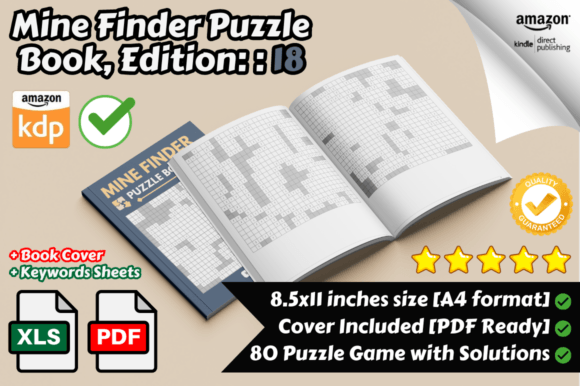
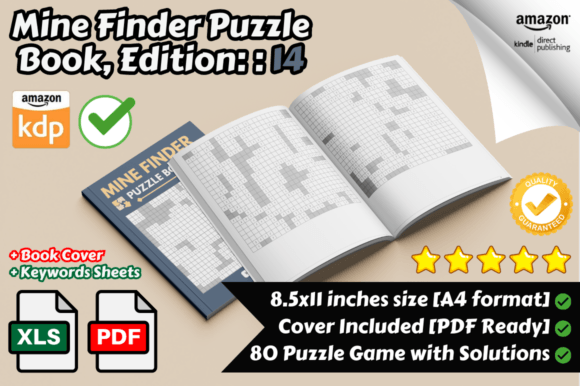
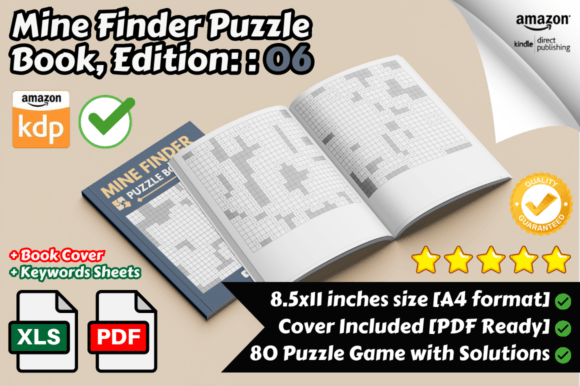
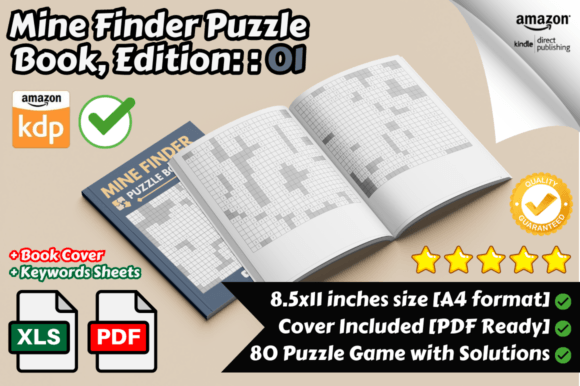
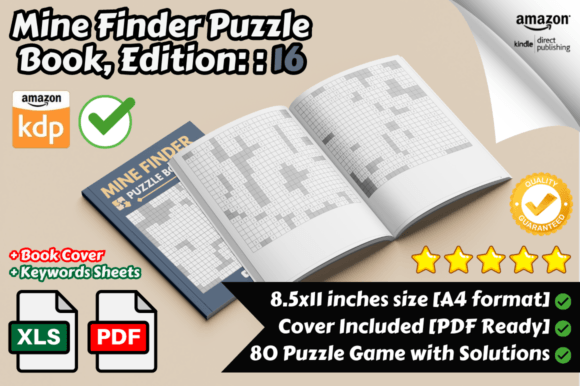
Understanding exactly what you get helps match expectations to outcomes. The core is a 160‑page PDF interior file formatted at 8.5×11 inches. Half of those pages — 80 in total — present Mine Finder puzzles, each designed with clear grids and logical progression. The other 80 pages contain full solutions, which means users never have to wonder if they made an error they can’t track down.
Beyond the puzzle pages, the package includes a professionally designed PDF cover file. For anyone publishing through Kindle Direct Publishing, this means the book can be uploaded without extra design work and still look polished in search results and on product pages. Additionally, an Excel spreadsheet is provided, packed with keywords that can support Amazon listing optimization. While that spreadsheet is especially valuable for sellers, it also gives hobbyists a peek into how discoverability works behind the scenes.
Different Audiences, Different Lenses
A product like this doesn’t serve everyone in the same way. The value depends heavily on what someone intends to do with it. Below are several common mindsets and how each might evaluate the Mine Finder Puzzle Book for KDP Part 16.
For KDP Publishers and Side‑Hustle Creators
Speed and presentation tend to dominate this group’s checklist. If you have already researched the low‑content book market, you know that mine‑finder puzzles (sometimes called minesweeper logic puzzles) have a steady, niche following. Creating a printable puzzle interior manually means not only designing the grid but also testing every solution for accuracy. For a single book, that’s hours of meticulous work. The 80‑puzzle interior removes that bottleneck entirely.
Publishers also care about what happens after the upload. A cover that already fits Amazon’s requirements and a keyword spreadsheet that suggests actual search terms help a listing look competent from day one. The cost of the resource becomes easy to weigh against the time saved. Instead of worrying about formatting, creators can focus on marketing, bundling, or simply adding this title to a growing catalog of puzzle books.
For Puzzle Enthusiasts and Everyday Solvers
Someone who simply enjoys solving logic puzzles may purchase finished puzzle books on Amazon, but they can also use this interior for personal enjoyment. Printing selected pages at home gives a steady supply of fresh challenges. The solution pages are especially appealing here — getting stuck without a way to verify an answer can be frustrating, but having the official solution at hand turns a moment of doubt into a learning opportunity.
From this angle, quality is measured by clarity and the right amount of challenge. The puzzles need to feel thoughtfully constructed, not randomly generated. While the description doesn’t detail difficulty levels, having 80 distinct puzzles suggests variety. An enthusiast might print a few to gauge whether the progression suits their skill level before committing to a full solve marathon.
For Teachers, Tutors, and Activity Coordinators
Logic puzzles like these are often used in classrooms, after‑school programs, and senior centers to sharpen reasoning skills without feeling like a test. Mine Finder puzzles specifically develop deductive thinking and pattern recognition, making them a stealthy cognitive workout. For an educator, the 8.5×11 format is convenient because it prints on standard letter paper without scaling issues.
Here, the evaluation is less about commercial potential and more about adaptability. Can the pages be used as standalone handouts? Will the solutions help a facilitator quickly check a student’s work? The answer is yes on both counts. The presence of a cover file might seem irrelevant, but if an educator wants to compile the pages into a unified booklet for a classroom set, having a pre‑made cover can give it a finished look, motivating students.
For Design‑Minded Creatives and Small Business Owners
Not everyone views a puzzle book as just a product to sell or consume. Some creative professionals use interiors like this as a foundation that they further customize — adding branding, modifying layouts, or combining with other puzzle types to build a unique hybrid. The fact that the puzzle grids are already tested and solved gives a reliable base from which to iterate.
A small business owner who runs a gift shop or stationery brand might see this as a way to quickly expand a product line. With the interior ready and the cover editable or usable as‑is, they can upload to KDP and order author copies for local retail. Speed to market becomes a critical priority, and pre‑tested puzzle integrity removes a risk that could otherwise lead to negative customer reviews.
Key Priorities When Evaluating a Ready‑Made Puzzle Book
When someone considers a resource like the Mine Finder Puzzle Book for KDP Part 16, their decision often revolves around a handful of factors. These are not mutually exclusive, but different users will weight them differently.
Ease of use sits at the top for most beginners. A clean PDF that opens without errors and prints exactly as intended is the baseline expectation. The detailed solutions folder the product into the “friendly for beginners” category because there’s no hidden complication — just straightforward pages.
Cost versus time saved is a pragmatic measure. For someone who values their time at even a modest hourly rate, buying a finished interior can be dramatically cheaper than designing, testing, and formatting 80 puzzles from scratch. Hobbyists might be less concerned with this equation, but for a publisher, it’s a direct calculation of return on effort.
Visual quality and consistency affect both reading experience and conversion. The included cover and consistent interior layout signal that the final printed book won’t look amateurish. For KDP sellers, this matters because customers do judge a book by its cover, and a poorly formatted interior leads to returns or complaints.
Long‑term usefulness goes beyond a single publication. The puzzles are not tied to a calendar, so the book remains relevant indefinitely. Someone could release it now, later, or even repurpose the grids in a mobile app with proper attribution boundaries. The evergreen nature of logic puzzles adds value for anyone thinking beyond a one‑time interaction.
Reliability of solutions is non‑negotiable. A puzzle book with errors destroys trust quickly. While no product description can prove absolute accuracy, the fact that the package dedicates 80 pages to solutions suggests the creator took verification seriously. Publishers and teachers alike will appreciate that built‑in safeguard.
Ways Different People Might Put This Resource to Work
Imagining concrete scenarios often makes the difference between interest and action. Here are a few practical examples that mirror real‑world use.
- A freelance graphic designer wants to launch a passive income stream but lacks puzzle‑creation skills. They download the interior, apply minor branding tweaks, and publish under their own imprint. The ready keyword list helps them avoid the common mistake of targeting overly broad search terms.
- A grandparent preparing a road‑trip activity binder for grandchildren prints the puzzle pages, slips them into clear sleeves, and pairs them with dry‑erase markers. The solution pages stay in a separate folder so the kids can check answers independently.
- A math teacher incorporates several puzzles into a unit on logical reasoning. Because the grid size and rules are consistent, the activity is easy to introduce without lengthy explanation, and early finishers can grab extra copies.
- A life coach uses puzzle pages as a metaphorical tool during resilience training, showing how systematic thinking helps untangle complex personal or professional challenges. The cognitive parallel resonates without the heavy tone of a formal exercise.
Deciding If This Fits Your Situation
Not every tool is right for every person. Matching your own goals, skill level, and project type to what the product offers can prevent disappointment.
If your main goal is to publish quickly on KDP with minimal effort while maintaining a professional look, this resource aligns well. The ready‑to‑upload format and supporting cover file eliminate two of the largest technical hurdles. The keyword spreadsheet further supports efforts to reach an audience rather than hoping for random discovery.
If you are a puzzle purist who wants to tweak rules or create your own grid sizes, you might find the fixed format limiting. The product is a finished interior, not a puzzle generator or an editable template beyond basic PDF annotation. While creativity can still happen — by adding themed covers or supplementary content — the core puzzles remain as designed.
If your priority is deep learning about puzzle design, this package shows the output of that skill but does not teach the process. You would need to supplement it with resources on how to construct logical deduction puzzles from scratch. However, for someone who simply wants a high‑quality solving experience or a market‑ready product, the “how it’s made” knowledge is secondary.
Finally, consider your comfort with digital assets. The package arrives as digital files, so you need a way to download, open, and potentially upload them. For tech‑comfortable users, that’s trivial; for someone less familiar with KDP’s platform, a small learning curve still exists around uploading and previewing the book before it goes live.
What Matters Beyond the Basics
Sometimes the less obvious features hold unexpected value. The inclusion of a keyword spreadsheet, for example, shifts this from a single product to a small educational asset. It reveals the types of phrases real buyers might type into Amazon’s search bar. This insight can influence not only this book’s listing but also future projects.
The page count balance between puzzles and solutions is another thoughtful touch. Some puzzle books compress solutions into a tiny unreadable section at the end, frustrating users. Here, a full page of solutions per puzzle preserves readability and respects the solver’s time.
For anyone who has ever tried to self‑publish a puzzle book only to discover a formatting error after receiving a proof copy, the reliability of a pre‑tested interior is a quiet reassurance. The most common pain points — inconsistent margins, blurry grids, missing solution keys — are already addressed.
The Mine Finder Puzzle Book for KDP Part 16 ultimately serves as a bridge between an idea and a tangible product or activity. Whether you hand it to a student, gift it to a puzzle‑loving friend, or upload it to reach a global audience, the groundwork is already laid. All that remains is deciding how you want to use it.