Mine Finder Puzzle Book for KDP Part 01: A Strategic Framework for Building a Profitable Puzzle Publishing Business
Creating and selling low-content books on Amazon Kindle Direct Publishing has become a widely recognized income stream, yet the marketplace grows more discerning each quarter. The Mine Finder Puzzle Book for KDP Part 01 enters this landscape not as a novelty item, but as a structured publishing asset that can help you move beyond guesswork. For entrepreneurs, freelancers, and small business owners exploring the puzzle book niche, understanding how to deploy this resource with intention matters far more than simply uploading files and hoping for traction.
This is not about flooding a market with interchangeable products. It is about recognizing that a well-designed puzzle book, supported by strategic positioning and clear audience understanding, can generate steady passive income while building a recognizable brand footprint. The Mine Finder Puzzle Book for KDP Part 01 offers a foundation for that vision, provided you approach it with a planning mindset rather than a quick-launch mentality.
Understanding the Product as a Strategic Publishing Asset
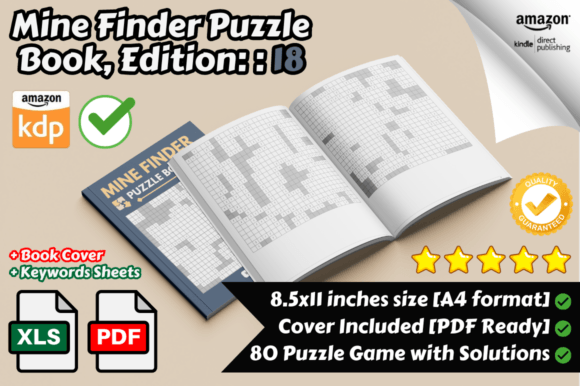
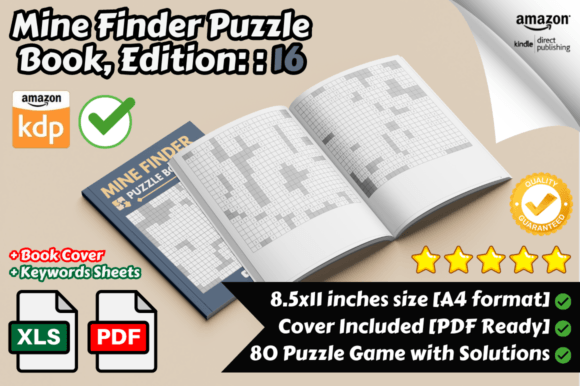
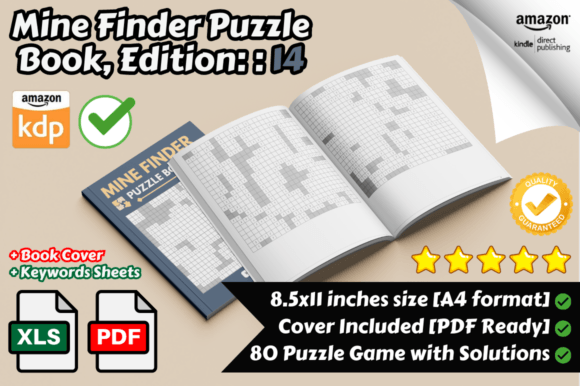
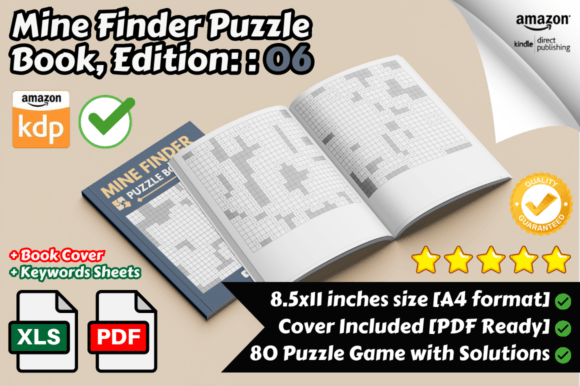
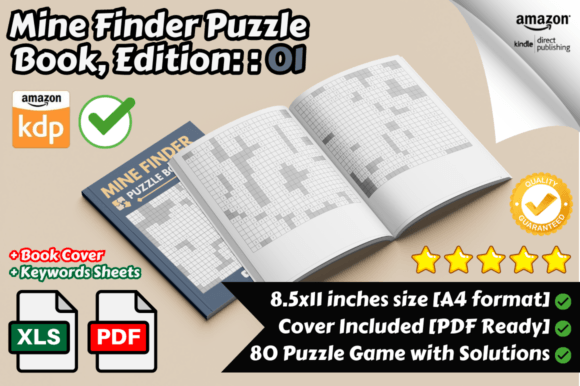
At its core, the Mine Finder Puzzle Book for KDP Part 01 is a ready-to-publish package containing a meticulously prepared PDF interior file spanning 160 pages in the industry-standard 8.5-by-11-inch format. Of those pages, 80 contain original Mine Finder puzzles, while the remaining 80 provide complete solutions. The package also includes a professionally designed PDF cover file and Excel spreadsheets populated with targeted keywords. This is not a collection of random puzzles hastily assembled. It is a publishing asset engineered to reduce your time-to-market while maintaining a level of polish that standalone creators often struggle to achieve on their first iteration.
For the strategic publisher, time is a non-renewable resource. Every hour spent formatting margins, aligning solution grids, or second-guessing cover dimensions is an hour not spent on market research, advertising optimization, or brand development. The Mine Finder Puzzle Book for KDP Part 01 absorbs those technical burdens, freeing you to concentrate on positioning, pricing, and customer acquisition. Savvy operators understand that outsourcing production complexity is not a cost, it is a force multiplier that redirects cognitive energy toward decisions that actually move the revenue needle.
Setting Clear Goals Before You Publish
One of the most common missteps in the low-content publishing space is launching products without a defined objective. Are you testing market demand, building a series, cross-promoting to an existing audience, or generating standalone income? Each goal demands a different approach to how you use the Mine Finder Puzzle Book for KDP Part 01.
If your primary aim is to validate whether puzzle books resonate with your target demographic, consider this package as a low-risk experiment. The heavy lifting of puzzle creation and layout is already complete. Your investment shifts toward research: analyzing comparable titles, studying customer reviews for recurring complaints, and identifying gaps that your presentation can fill. A smaller, focused launch with a single title can yield actionable data without overextending resources.
For publishers aiming to establish a recurring revenue stream, the strategic move is to view this release as part one of a deliberate sequence. Consistency in interior design, puzzle difficulty progression, and cover branding across multiple volumes fosters customer loyalty. When a buyer enjoys the first book, the presence of a coherent series makes repeat purchasing almost automatic. Plan your publishing calendar around that behavior rather than treating each title as an isolated transaction.
Positioning Your Mine Finder Puzzle Book for the Right Audience
Generic puzzle books compete primarily on price, which is a race to the bottom. The alternative is thoughtful positioning that attracts buyers willing to pay a premium for an experience that feels curated rather than mass-produced. The Mine Finder Puzzle Book for KDP Part 01 gives you the raw material; your positioning determines the perceived value.
Consider segmenting your audience by use case rather than by demographic bracket alone. A puzzle book marketed as a travel companion for business professionals on long flights carries different appeal than one positioned as a cognitive exercise tool for seniors seeking mental stimulation. The same interior content can serve multiple audience segments when framed correctly. Your cover copy, product description, and even the subtitle you choose should speak directly to the specific promise you are making to a defined reader.
Professionals in high-pressure roles often seek structured mental breaks that feel productive rather than wasteful. Marketing the Mine Finder Puzzle Book for KDP Part 01 as a mental reset tool that sharpens pattern recognition and logical deduction skills aligns with an audience that values efficiency even in leisure. The language you use in your listing should reflect that mindset: precise, benefit-oriented, and free of exaggerated claims that undermine credibility.
Planning Your Launch with Operational Precision
Launching without a plan is a reliable way to generate disappointing results regardless of product quality. The Mine Finder Puzzle Book for KDP Part 01 provides components that simplify execution, but you still need to orchestrate the launch sequence deliberately.
Start with the keyword spreadsheets included in the package. These are not decorative additions. They represent a shortcut to discoverability on the Amazon platform when applied with nuance. Rather than stuffing every suggested keyword into your backend fields, categorize them by intent. Some keywords indicate buying readiness, others suggest casual browsing. Prioritize the former in your title and subtitle. Use the latter to populate your search terms fields strategically. The spreadsheet gives you raw intelligence; your judgment converts it into visibility.
Pricing strategy also requires forethought. Examine the competitive landscape for puzzle books of comparable page count and complexity. Pricing too low can signal low quality and compress your royalty margins. Pricing too high without established brand authority can slow initial traction. A deliberate approach might involve launching at a moderate price point, gathering reviews, then adjusting upward once social proof accumulates. The math behind Amazon royalty structures rewards books priced above certain thresholds, and understanding those thresholds before you publish influences your long-term earnings trajectory.
Branding, Authority, and the Long-Term Horizon
A single puzzle book rarely transforms a publishing operation into a sustainable business. The Mine Finder Puzzle Book for KDP Part 01 becomes strategically valuable when viewed as the opening move in a broader brand-building effort. The cover file provided offers a professional starting point, yet the most successful publishers eventually develop a recognizable visual identity that carries across multiple titles and sub-niches.
Think beyond the individual product. What does your publisher brand stand for? Is it rigorous mental challenges, elegant minimalist design, educational enrichment, or perhaps nostalgic puzzle experiences? Consistency across your catalog reinforces this identity. When a customer scrolls through search results and recognizes your cover style instantly, your marketing cost per acquisition effectively decreases because brand recall shortens the decision cycle.
Authority in the puzzle space accumulates through reliability. Books that are error-free, logically consistent, and professionally presented earn reviews that compound over time. The Mine Finder Puzzle Book for KDP Part 01 gives you a foundation that meets these criteria, but your ongoing responsibility is quality assurance. Before publishing, verify a sample of puzzles and solutions to confirm accuracy. A single unresolved error in a solution section can generate negative reviews that disproportionately impact early sales momentum.
Practical Integration into a Broader Publishing Portfolio
Puzzle books rarely constitute a publisher's entire catalog in isolation. They work best as part of a diversified approach that spreads risk across multiple formats and audience segments. The Mine Finder Puzzle Book for KDP Part 01 can complement a portfolio that includes activity books, journals, planners, or educational workbooks. The keyword data you gather from launching this title informs how you structure future products.
Consider cross-promotion mechanics early. If you have an existing email list, a social media following, or author website traffic, plan how the puzzle book fits into your content ecosystem. A puzzle book makes an excellent lead magnet for audiences interested in cognitive training, stress relief, or screen-free entertainment. Even if direct sales from the book alone are modest, its value as a brand touchpoint can justify the publishing effort.
For freelance designers and content creators serving publishing clients, the Mine Finder Puzzle Book for KDP Part 01 represents a different kind of strategic asset. White-label or resell opportunities allow you to offer completed puzzle books to clients who lack production capabilities but possess marketing audiences. The margin profile changes when you sell to businesses rather than consumers, and the volume dynamics shift accordingly. Align your use of the product with the business model that matches your existing infrastructure.
Risks of Using the Product Without Clear Intent
The accessibility of ready-made publishing assets can create an illusion that market success is automatic. Uploading the Mine Finder Puzzle Book for KDP Part 01 without audience research, competitive analysis, or a promotional strategy risks joining the vast inventory of ignored listings that populate Amazon's deeper pages. The marketplace rewards publishers who solve specific problems for identifiable readers, not those who simply make products available.
Another risk lies in neglecting differentiation. If multiple publishers use the same package without customization, the resulting titles become interchangeable commodities. Even minor modifications to the cover messaging, interior formatting flourishes, or supplementary content can create meaningful separation. The strategic publisher treats the base files as a starting point for iteration rather than a final product to be uploaded unchanged.
Time investment misallocation also warrants caution. Publishing a polished puzzle book feels productive, but if that effort distracts from higher-leverage activities such as building an email list, cultivating reviewer relationships, or testing advertising campaigns, the net business impact may underwhelm. Integrate the publishing process into your broader operational rhythm rather than letting it consume disproportionate attention.
Making Intentional Decisions from Day One
Intentionality separates publishers who build durable income streams from those who chase trends and burn out. Before you open the PDF interior file included in the Mine Finder Puzzle Book for KDP Part 01, define what success looks like for this specific release. A measurable outcome might be a target number of organic reviews within 90 days, a specific rank threshold, or a revenue contribution goal across a series of five planned titles.
Write down your assumptions. Why do you believe this puzzle type will attract buyers? What evidence supports that belief? Which competitors are already serving this audience, and what gaps exist in their offerings? Documenting these hypotheses creates a feedback loop. When market data arrives, you can compare results against expectations and refine your approach systematically rather than emotionally.
The Mine Finder Puzzle Book for KDP Part 01 eliminates many of the technical obstacles that discourage aspiring publishers. That acceleration is valuable only when directed toward a well-considered objective. Used with strategic clarity, it becomes more than a collection of puzzles and solutions. It functions as a lever that amplifies your publishing capabilities while preserving the time and energy required to make smart decisions about positioning, audience engagement, and brand development.
Scaling from a Single Title to a Recognized Catalog
The economics of puzzle book publishing improve with scale, but scale must be built on a foundation of quality and consistency. A single Mine Finder Puzzle Book for KDP Part 01 release can validate demand. Subsequent volumes allow you to compound visibility as Amazon's algorithms begin linking your titles through also-bought associations and series recommendations.
Plan the expansion trajectory before you publish the first title. How many Mine Finder volumes can the market support? What difficulty gradation makes sense across a series? Could the Mine Finder concept extend into themed editions, seasonal variations, or combination books that pair Mine Finder puzzles with complementary formats? The answers to these questions shape your publishing roadmap and influence everything from inventory planning to promotional budget allocation.
The keyword spreadsheets included in the package gain additional value as you scale. Track which keywords drive the most conversions for your first release, then feature them prominently in subsequent titles. Build a proprietary understanding of search behavior in the puzzle niche that competitors relying solely on generic research tools may overlook. This accumulated insight becomes a proprietary advantage that extends well beyond any single product or format.
Ultimately, the Mine Finder Puzzle Book for KDP Part 01 offers a structured path into a market that rewards persistence, quality, and strategic thinking. The publishers who derive the greatest value from it will be those who resist the temptation to treat it as a lottery ticket and instead approach it as a business asset requiring thoughtful deployment, continuous refinement, and patient execution over time.