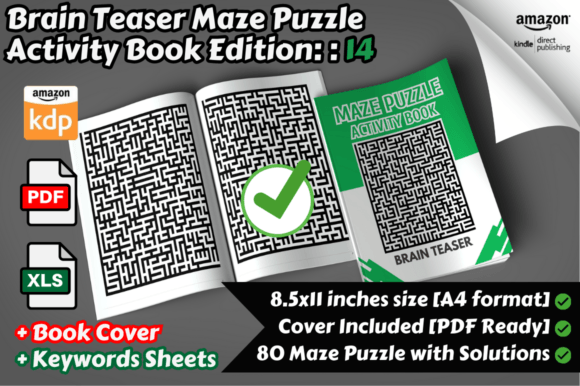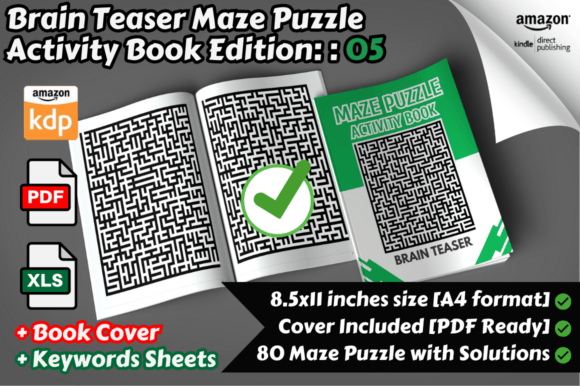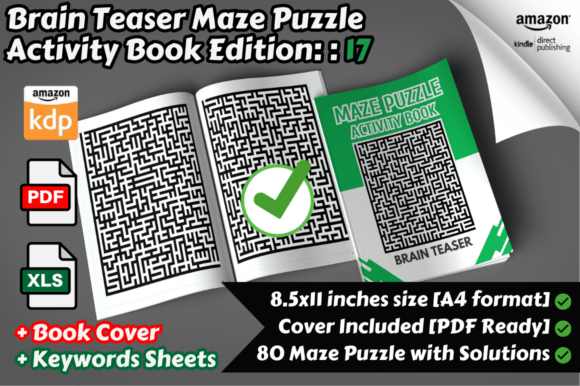
Maze Puzzle Activity Book Edition 17
Every once in a while, a design resource comes along that challenges convention and ignites fresh ideas. The Maze Puzzle Activity Book Edition 17 does exactly that—merging the fascination of intricate mazes with a clean, versatile format that graphic designers, brand strategists, and visual thinkers can instantly appreciate. More than a simple puzzle collection, this 160-page interior file offers a masterclass in high-contrast geometry, thoughtful layout, and uncluttered visual hierarchy—elements every creative professional can repurpose and learn from.
The Visual Language of Mazes in Graphic Design
Maze patterns have long captivated the human eye. Their winding paths, sharp turns, and rhythmic repetition create a natural sense of movement and depth. In graphic design, these qualities translate into powerful visual tools. A maze motif can suggest complexity, discovery, or strategic thinking—perfect for branding that wants to convey problem-solving prowess or intellectual appeal. The Maze Puzzle Activity Book Edition 17 distills this visual language into a pure, adaptable form. Each puzzle functions as a black-and-white vector-like graphic, ready to spark ideas for logo marks, background textures, or editorial accents.
Modern brand identity projects often lean on simple geometric patterns to build recognition. The organic yet structured lines of a maze offer a unique alternative to generic polka dots or stripes. When scanned from the book’s crisp PDF pages, a maze can be vectorized, hand-traced, or used as a direct raster element in packaging design, stationery, or even digital marketing assets. The key is understanding how such a graphic behaves across scales—something Edition 17 demonstrates beautifully through its consistent line weights and deliberate spacing.
A Closer Look at Edition 17’s Design Framework
What sets this puzzle book apart for designers isn’t just the content, but the intentional visual design of the content itself. The PDF is formatted at 8.5×11 inches—a familiar portrait size that translates effortlessly into print-on-demand templates, magazine inserts, or digital product mockups. The interior is divided into two equal halves: 80 pages of brain-teasing mazes and a separate 80-page solution section. This clear editorial separation mirrors best practices in editorial design, where information architecture and scannability are paramount.
The color palette remains intentionally monochromatic. High-contrast black paths against white backgrounds eliminate visual noise, making each puzzle a ready-made asset for UI design wireframes, loading screens, or app onboarding elements. The typography accompanying the puzzles, though minimal, demonstrates a quiet confidence—likely a clean sans-serif that lets the graphics breathe. Such restraint is a lesson for any designer: when the central visual is complex, everything else must step back to maintain visual hierarchy.
Leveraging Puzzle Aesthetics for Branding Projects
Brand strategists often seek imagery that tells a story. A maze inherently implies a journey, a challenge, and a rewarding resolution. When integrated into a logo design, a simplified maze emblem can communicate guidance, wisdom, or innovation. The Maze Puzzle Activity Book Edition 17 gives you dozens of starting points—each puzzle can be cropped, rotated, or abstracted to fit a modern aesthetics brief. Consider using a subtle maze pattern as a watermark on presentation slides, or engraving a small section onto a product tag for a tactile surprise.
Social media posts thrive on intrigue, and a well-placed maze graphic stops scrollers mid-swipe. A section of a particularly ornate puzzle can become an interactive social media graphic—asking followers to trace the path in their mind. This not only boosts engagement but also reinforces the brand’s clever, playful personality. Designers working on packaging design can turn a maze into a repeat pattern for gift wrap, box interiors, or tissue paper, adding an element of hidden delight that customers remember.
Practical Applications Across Design Disciplines
The versatility of maze-inspired visuals extends far beyond standalone puzzles. Here are a few concrete ways design professionals can incorporate elements from this resource into daily creative projects:
- Web and UI design: Use thin maze lines as subtle background textures on hero sections, or animate a path for a playful loading animation that reinforces brand character.
- Editorial and print design: Pull a maze fragment to create chapter dividers, infographic connectors, or even a full-bleed cover graphic that demands a second glance.
- Merchandise and apparel: Screen-print a bold maze onto tote bags, t-shirts, or notebook covers. The graphic’s intricate nature makes it a conversation starter and a unique branding element.
- Digital products and UX design: Design onboarding flows that use a maze metaphor to guide users through setup steps, turning a mundane process into a visual story.
- Advertising campaigns: A teaser image of an unsolved maze with a headline like “Can you find your way to savings?” generates curiosity and reinforces a campaign’s clever tone.
Selecting and Adapting Maze Elements for Professional Results
Not every maze works for every project. When pulling inspiration from the Maze Puzzle Activity Book Edition 17, evaluate scalability and readability. A highly intricate path may become a jumbled mess when shrunk to a mobile screen, so simplify line complexity or use just a section. Pay attention to consistency: if your brand uses rounded corners and soft curves, a maze with sharp right angles might feel abrasive—opt for a puzzle with more organic, flowing paths instead.
Typography pairing is equally critical. The maze should complement, not compete with, your message. A strong, geometric sans-serif often sits well beside maze graphics, while a delicate serif might clash with the graphic’s bold linearity. Always test the combination against your color palette. Though Edition 17’s puzzles are black and white, you can easily invert them to white on dark for dark-mode interfaces, or tint them to a brand’s secondary color for a cohesive brand identity system.
Elevating Creative Workflows with Structured Play
There’s a reason puzzle books endure: they force us to slow down, focus, and think sequentially—all states that benefit a designer’s brain. Keeping a copy of the Maze Puzzle Activity Book Edition 17 on your desk or loaded on a tablet can serve as a quick mental reset between demanding client revisions. The act of tracing a path manually can unblock creative thinking and lead to unexpected design inspiration. Moreover, the book’s solutions section reveals how every complex problem has a clear, linear answer—an encouraging thought during any challenging design workflow.
Thoughtful design choices turn ordinary materials into memorable brand experiences. The Maze Puzzle Activity Book Edition 17 proves that even a humble activity book can become a rich source of creative assets when viewed through a designer’s lens. By studying its visual discipline—clean layouts, intentional contrast, and unwavering focus on the user’s journey—you’ll not only strengthen your next project’s aesthetics but also sharpen your ability to communicate visually. When form and function intersect so gracefully, the result is always a professional presentation that stands out.