Halloween Kakuro Puzzles: A Spooky-Season Logic Challenge
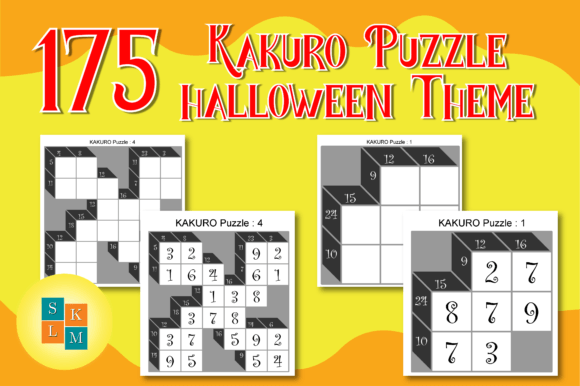
When you blend the number-crunching satisfaction of Kakuro with the playful eeriness of October, you get Halloween Kakuro Puzzles. These are not just standard cross-sum grids; they arrive dressed in a thematic overlay of ghosts, pumpkins, and a spooky font designed to heighten the seasonal mood. For puzzle enthusiasts, event organizers, or do-it-yourself book creators, this specific offering presents an intriguing bundle: 175 puzzles paired with 175 solutions, all rendered as high-resolution PNG files at 300 DPI. The grids themselves are structured as 7 distinct layouts, each repeated 25 times, providing a substantial volume of content. The file format and transparent backgrounds make the puzzles particularly friendly for self-publishing platforms like Kindle Direct Publishing (KDP) or for printing crisp activity sheets at home. But beyond the product specs lies a practical question: does a themed puzzle set like this serve your needs better than a more generic alternative, and what should you evaluate before deciding?
Understanding the Appeal of Themed Logic Puzzles
Kakuro already demands a satisfying blend of arithmetic and deductive reasoning. Adding a Halloween motif transforms the solving experience into something event-driven. Instead of a plain white grid, solvers encounter borders adorned with cobweb-like squiggles, digits rendered in a slightly irregular, “spooky” typeface, and interior elements that might include tiny bats or pumpkin icons tucked between the cells. For people who enjoy seasonal activities—teachers planning a classroom brain break, parents organizing a party, or hobbyists looking to settle into an armchair with a hot cider and a pencil—this thematic upgrade can elevate a routine puzzle into a festive ritual. The psychology is straightforward: novelty reinvigorates engagement. Even a familiar logic exercise feels fresh when wrapped in a Halloween skin, which may encourage longer, more focused solving sessions.
What the Halloween Kakuro Package Typically Contains
To assess whether this resource fits your goals, it helps to understand exactly what you’re receiving. The described set includes:
- 175 unique puzzles — a large enough bank to fill an entire activity book or provide weeks of daily solving.
- 175 corresponding solutions — each presented in a clean format so solvers can self-check or you can include answer pages in a printed collection.
- 7 grid designs — likely varying in size or cage arrangement, with 25 puzzles per design. This adds visual variety without making the difficulty curve unpredictable.
- PNG files at 300 DPI — a print-ready resolution that prevents pixelation even when scaled. Transparent backgrounds allow you to layer them onto decorated pages without white-box clipping.
- Spooky font treatment — the numbers and clues use a typeface that evokes a playful haunted-house feel, while the solution pages presumably stay in that same style for consistency.
- Recommended festive interior elements — a note to those building a KDP book that adding further decorative touches (borders, coloring opportunities, or seasonal icons) can make the final product more marketable.
Benefits of Choosing a Halloween Kakuro Set
For the right audience, this themed package offers several practical advantages. First, it significantly reduces the time investment required to produce a polished seasonal puzzle book. Instead of designing grids from scratch and worrying about answer keys, you receive ready-to-place images. The high DPI ensures that text remains crisp on both paper and screen, which is critical for small-digit puzzles where legibility can make or break the solving experience. The sheer quantity—175 puzzles—gives you ample content to assemble a substantial publication or to rotate through many weeks of holiday-themed leisure. Because the puzzles are Kakuro, they also carry cognitive benefits: strengthening mental arithmetic, logical sequencing, and sustained attention. When themed for Halloween, they become a natural fit for family game nights, escape-room preambles, or school harvest festivals where you want a quiet-but-entertaining corner activity.
From a content creator’s perspective, the PNG format integrates smoothly into design software like Canva, InDesign, or PowerPoint. You can customize the background, add page numbers, or insert “good job” encouragement pages between puzzles. The spooky font does much of the atmospheric heavy lifting, but the recommendation to layer in additional festive elements—maybe a repeating candy corn border or a “Boo!” header—means you can differentiate your final product from competitors using the same source files. For personal use, the digital nature lets you print multiple copies for a classroom or a Halloween party without purchasing repeated physical books.
Tradeoffs and Considerations Before Committing
No puzzle set is universal, and a themed one naturally carries tradeoffs. The spooky font, while charming, may compromise readability for some solvers. Letters that dip and twist can cause a “7” to resemble a “1” or make the smaller clue numbers inside cages harder to parse at a glance. If the target audience includes older adults or children still mastering number shapes, the decorative typeface could become a friction point rather than a delight. You might need to test-print a sample to ensure the digits remain clear at the intended page size.
Another consideration is the number of grid designs. Seven layouts with 25 repetitions each means the structural challenge can feel familiar by the tenth instance of a given design. Variety comes mainly from the number fill, not the cage geometry. For a solvers who craves constant novelty in grid shape, this could feel repetitive. For a KDP book, however, that repetition can actually be a strength: it creates a consistent visual rhythm and allows buyers to know what to expect.
The seasonal focus also limits the shelf life. A Halloween Kakuro book peaks in relevance during September and October. Outside those months, it risks feeling like leftover candy in November. If you are a publisher, consider timing your launch to capitalize on early shoppers. For personal use, ask yourself whether you’ll still reach for a pumpkin-clad puzzle in December. If your interest is purely in the number challenge, a generic Kakuro collection might serve you better year-round.
Furthermore, although the files are print-ready, they demand a certain amount of technical comfort. Inserting images, setting margins for bleed, and aligning solutions correctly could stymie someone brand new to book formatting. The absence of a PDF version means you are working with individual PNGs, which can be cumbersome if you are assembling a document with hundreds of pages. Make sure your workflow supports bulk image handling.
When Halloween Kakuro Puzzles Are the Right Choice
This set aligns closely with several specific scenarios. You are a strong candidate if:
- You are building a low-content or medium-content KDP book specifically for the Halloween market and need ready-made puzzle interiors.
- You plan to host a Halloween gathering and want printed activity sheets that double as party favors.
- You are an educator searching for holiday-themed morning work or math station activities that still meet cognitive objectives.
- You gift puzzle books to someone who adores the Halloween aesthetic and appreciates clever number challenges.
- You supplement a family activity calendar and enjoy rotating puzzles with the seasons to keep motivation high.
In these cases, the themed design aligned with the packaging convenience and volume makes the investment easy to justify. The presence of solutions also means you never have to calculate an answer key manually, saving hours of checking.
When Alternatives Might Be Worth Considering
Despite its charms, the Halloween Kakuro set is not a one-size-fits-all answer. Consider alternative puzzle resources if:
- Legibility is paramount. If you or your intended audience find ornate fonts distracting or confusing, a standard Kakuro collection with clean sans-serif digits could provide a smoother, more accessible solve. Many free puzzle generators offer typeface customization.
- You need puzzles for all seasons. A generic Kakuro book or a puzzle magazine subscription offers year-round value without tying you to a single month. Some solvers also dislike mixing holiday imagery with what they view as a “serious” numbers game.
- You prefer interactive solving. Digital Kakuro apps or online platforms provide error-checking, hints, and the ability to solve on a tablet without printing. The PNG files here are static images; they won’t adapt to a mobile-friendly interactive format without additional coding.
- Your budget is extremely tight. While the set saves time, free Kakuro puzzles exist online in abundance. If you have the skills to design your own grids and are not pressed for a quick turn-around on a KDP project, the cost may be harder to justify.
- You want highly differentiated difficulty tiers. Unless the product description specifies an easy-to-hard progression across the seven layouts, you may end up with a relatively uniform challenge level. For a book targeting beginners through experts, you might need to supplement or select a set explicitly tiered.
Making an Informed Decision
Before adding Halloween Kakuro Puzzles to your cart, take a step back and map the product against your primary goal. If you are a KDP creator, think about the final book’s page count and whether the puzzle-to-solution ratio (1:1) leaves room for decorative interior pages or front matter. You might plan to intersperse the puzzles with coloring pages or trivia to create a more varied “Halloween Activity Book.” The PNG format and the suggestion to add more festive elements directly support that kind of adaptation. For personal solvers, consider printing just one sample grid from the set (if a preview is available) to evaluate the spooky font’s legibility at your preferred paper size. Ask yourself whether the seasonal novelty genuinely elevates the experience for you and those you’ll share the puzzles with. The set provides a solid foundation of well-structured logic challenges; the Halloween dressing is a deliberate, targeted enhancement. When chosen for the right context—whether it’s a holiday business project, a classroom treat, or a personal indulgence in seasonal coziness—it can deliver exactly the blend of math and magic that the season invites. If, however, your needs lean toward minimalist design, cross-context versatility, or a broader range of puzzle architectures, you may be better served by a non-themed collection. Whatever path you take, understanding these practical dimensions will help you select a puzzle resource that genuinely matches your Halloween ambitions.