Harnessing the Editable Mental Health Diary Template for Mindful Living and Pattern Awareness
Why a Structured Mood Journal Matters in a Fast‑Paced World
Modern life rarely offers a natural pause. Between constant notifications, shifting work demands, and personal responsibilities, emotional awareness often slips into the background. Many people find themselves reacting rather than responding, unable to name exactly what they feel until the pressure becomes overwhelming. A daily and monthly mood tracking journal bridges that gap by transforming fleeting impressions into tangible data. This isn’t about overanalyzing every moment; it’s about creating a reliable container for self‑observation. When someone sits down each evening with a template that asks “Why do I feel this way?” alongside a scale for energy and stress, they begin to connect dots that previously remained invisible.
The editable mental health diary template enters this space not as a rigid prescription but as a flexible starting point. Because it’s editable on Canva, users can adjust colors, fonts, and even the phrasing of prompts to match their comfort level. A minimalist might strip down the design to essential lines, while a creative soul could add inspiring illustrations or soft watermarks. Either way, the core function stays intact: a consistent daily check‑in that gently guides reflection. Over weeks and months, the filled pages become a personalized map of emotional terrain, highlighting triggers, resilience patterns, and overlooked sources of gratitude.
Breaking Down the Editable Mental Health Diary Template Pages
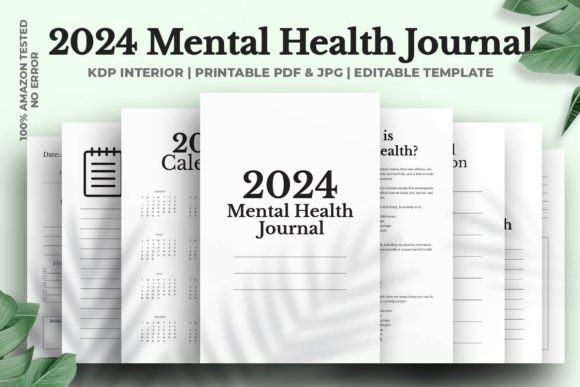
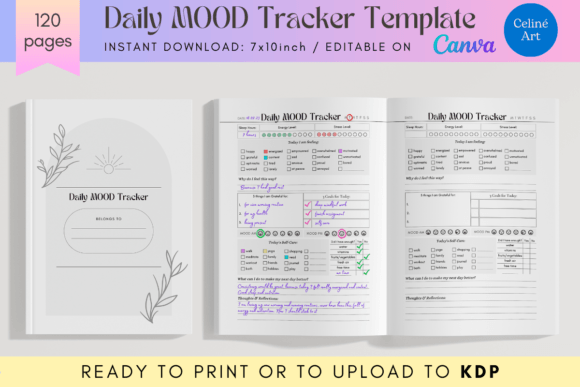
The strength of this journal lies in its carefully chosen daily prompts. Each page opens with an “A belongs to” field, which establishes ownership and intention from the first line. Right below, the Date Day section anchors the entry in time, making it easy to track rhythms across seasons or life phases. The inclusion of Sleep Hours and Energy Stress Levels immediately links physical well‑being to emotional states—a connection that often gets lost when people only note their mood in words.
The heart of the page is the “Today I feel” prompt followed by “Why do I feel this way”. This two‑part question trains users to go beyond labeling an emotion and instead explore its origin. A journal entry that simply reads “anxious” provides limited insight, but adding “because I had an unresolved conversation with a colleague and slept poorly” transforms the note into actionable awareness. From there, the template introduces balancing forces: 3 Things I am Grateful for and 3 Goals for Today. Gratitude reshapes perspective, while small, intentional goals rebuild a sense of agency even on difficult days.
Self‑care is integrated directly into the flow. The “Today’s Self‑Care” section might list a walk, a bath, or simply taking five deep breaths. The check‑in “Did I have enough water, vitamins, etc.” turns basic nourishment into a mindful act, not an afterthought. The reflective question “What can I do to make my next day better” encourages micro‑adjustments rather than grand overhauls. Finally, the open “Thoughts Reflections” area provides uninterrupted space for longer processing, while the additional Monthly Mood Tracker and Monthly Gratitude pages allow a zoomed‑out view of trends. A set of Notes Pages at the end offers overflow room for breakthroughs, quotes, or reminders.
Customizing the Journal for Personal and Professional Use
One of the most practical aspects of this resource is that it arrives as an editable mental health diary template compatible with Canva. For individuals, this means no design experience is necessary. Typography can be softened to a friendly serif, colors shifted to calming pastels, or line spacing adjusted for larger handwriting. A parent might add a small illustration box for a child, while a therapist could adapt the language slightly to suit a client’s therapeutic framework. The ability to tweak every element removes the friction that often leads people to abandon generic journals.
For professionals, coaches, and wellness entrepreneurs, the template offers a different kind of flexibility. The files are built to KDP standards: 7 x 10 inches, 120 pages, CMYK color, with bleed. Since the source file is editable and the PDF is already tested on Amazon KDP, a publisher can rebrand the interior, add a unique cover, and have a market‑ready product in a fraction of the usual time. The same template could become a gratitude‑only journal, a teen mental health diary, or a postpartum mood tracker simply by changing the heading styles and prompts. In each case, the editable nature keeps the workload manageable while preserving a polished, high‑quality result.
Integrating the Daily Tracker into a Productive Routine
Sustainability is the silent challenge behind any journaling habit. The design of this daily mood tracker supports consistency in subtle but important ways. Because each page has a structured yet airy layout, filling it out rarely feels like a chore. The Sleep Hours and Energy Stress Levels boxes can be ticked or circled in seconds, creating a quick win that motivates further engagement. The gratitude and goal sections naturally top the entry with positive intention before moving into the more reflective prompts.
Consider a professional who struggles with afternoon energy crashes. By routinely logging sleep hours and stress levels alongside mood, they might notice that on nights with fewer than six hours of rest, irritability and low focus spike the following afternoon, regardless of caffeine intake. The “What can I do to make my next day better” prompt then becomes a problem‑solving engine: maybe a short walk after lunch, a glass of water at 3 p.m., or a five‑minute meditation. Over weeks, the journal shifts from a record of problems to a laboratory of solutions.
Students and researchers can use the monthly mood tracker and monthly gratitude pages to correlate academic pressure with emotional well‑being. An educator might adapt the template for classroom use, stripping it down to a simple feeling check‑in plus one gratitude entry. The existence of a notes section means extended reflections or therapy insights don’t need to scatter across separate notebooks. Everything stays contained within the same 120‑page volume, which is portable and substantial enough to last several months.
The Science of Reflection and Pattern Recognition
Journaling for mental health isn’t just a trendy habit; it rests on a foundation of psychological research. Expressive writing and structured reflection have been shown to reduce symptoms of anxiety and depression, improve working memory, and even support immune function. However, unstructured journaling can sometimes lead to rumination rather than clarity. The carefully balanced prompts inside this editable mental health diary template guard against that spiral. By moving from emotional expression (Today I feel, Why do I feel this way) to cognitive reframing (3 Things I am Grateful for, 3 Goals) and finally to behavioral planning (Today’s Self‑Care, What can I do to make my next day better), the sequence mirrors components of cognitive behavioral therapy and positive psychology.
The inclusion of a monthly mood tracker adds a distinct layer of insight. A daily entry captures a snapshot, but the monthly overview reveals cycles. Someone might realize their mood dips near the end of the work week, or that gratitude spikes during weekends spent outdoors. This pattern recognition is especially valuable for those managing conditions influenced by hormonal cycles, seasonal changes, or chronic stress. When shared with a therapist, a filled monthly tracker becomes a concrete discussion tool, reducing the reliance on vague recollections.
Even the seemingly small detail—the “Did I have enough water, vitamins, etc.” prompt—aligns with the growing understanding of the gut‑brain axis and the impact of hydration on cognition. By linking physical self‑care to emotional outcomes daily, the journal gently reinforces the understanding that mental health is intertwined with bodily health. That awareness alone can motivate more consistent hydration, better supplement routines, or more mindful nutrition without requiring a separate health tracker.
Leveraging the Journal for Business and Publishing
For content creators and small business owners, the editable mental health diary template opens a low‑risk entry point into the self‑help and wellness publishing niche. The 7x10 inch size is a popular KDP format that appeals to customers who want a substantial journal without bulk. The 120‑page count strikes a balance between longevity and affordability, while the bleed setting ensures that any edge‑to‑edge background colors print cleanly. Since the file is fully tested on Amazon KDP, the technical guesswork disappears.
Creators can start by adjusting the template’s aesthetics to match their brand palette and voice. A coach specializing in mindfulness might keep the prompts but soften the language, while a fitness‑focused creator could add an extra line for daily movement. The Notes Pages at the end give buyers extra space, which is often a appreciated feature in review comments. By offering a printable version or a hardbound option through KDP, the business owner adds a product that requires minimal ongoing maintenance but aligns closely with a wellness‑oriented audience.
Importantly, the editable source file means the journal can evolve. If user feedback suggests a new prompt—such as a daily affirmation or a water intake counter—that update can be implemented quickly without redesigning from scratch. Multiple variations can coexist: a “classic” edition, a “morning only” version, or a “weekly reflection” journal, all built from the same core template. This adaptability keeps a small product line fresh and responsive to market shifts.
Practical Considerations for Long‑Term Use
Getting the most from a structured mood journal involves a few practical habits. First, consistency matters more than comprehensiveness. Even a partially filled page, completed honestly, provides more value than a perfectly detailed entry done only once a week. The layout accommodates quick checkmarks and brief bullet points for busy days, while still offering ample space for elaboration when time allows. Keeping the journal in a visible spot—on a nightstand or desk—serves as a gentle environmental trigger.
Second, the editable mental health diary template can be customized to reflect evolving needs. A user might start with the default warm colors and later switch to a cooler palette during a season of grief, or enlarge the gratitude section if they find it particularly grounding. Because Canva stores versions, it’s possible to print a new batch of pages whenever a fresh iteration feels right. This prevents the staleness that sometimes accompanies fixed‑format journals.
Finally, reflecting on the monthly mood tracker should be a deliberate act. At the end of each month, taking ten minutes to notice which days were marked with high stress or low energy and which were filled with gratitude helps translate raw data into self‑compassionate insight. Over several months, these observations often lead to more intentional scheduling, healthier boundaries, and a deeper appreciation for small, restorative moments that might otherwise pass unnoticed.
Real‑World Relevance Across Different Audiences
The broad appeal of this journal lies in its balance between structure and freedom. A consumer looking for a simple self‑care practice doesn’t need to learn a complicated system. A professional can use it as a low‑tech complement to digital task management, grounding their day with a few handwritten lines. An educator might find that the monthly gratitude page becomes a classroom exercise in emotional vocabulary. A researcher or therapist could use the filled templates as qualitative data, tracking linguistic patterns or emotional frequency over time.
For hobbyists who enjoy handwriting, fountain pen inks, or scrapbooking, the 120 pages offer a tactile canvas that screen‑based apps cannot replicate. The 7x10 size provides enough room for expressive writing without becoming unwieldy. Because the interior is designed with bleed, those who choose to print at home or through a professional service get clean, edge‑to‑edge results. The CMYK color profile ensures that any soft background tints print accurately, preserving the calm aesthetic that makes the journal inviting to use daily.
In a world that often prioritizes productivity over presence, a tool that gently asks “How do you feel and what do you need today?” performs a quiet but radical act. The editable mental health diary template exemplifies that philosophy by being adaptable, evidence‑informed, and deeply human. Whether it’s customized as a private companion through a difficult life chapter or published as a polished product for a wellness community, its value multiplies with every honest entry.