Choosing a 2024 Summer Planner for Kids: What Parents and Educators Need to Know
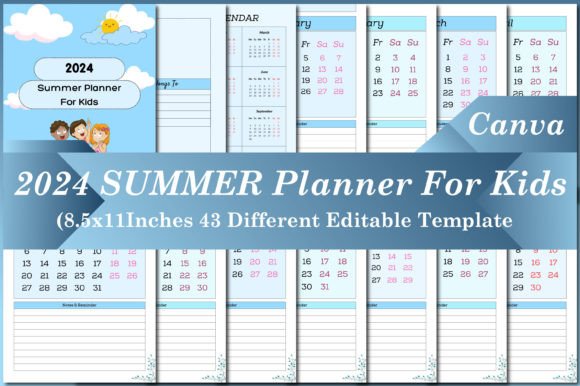
Summer brings a shift in daily rhythms. Without school routines, many families look for gentle structure that keeps children engaged without feeling overly scheduled. A 2024 Summer Planner for Kids can bridge that gap. One popular format includes a print-ready PDF paired with an editable Canva link, giving parents and educators flexibility. This particular version spans 43 pages with templates like a daily checklist, reading log, bucket list, book tracker, and a 2024 calendar, all designed at 8.5×11 inches with 300 DPI and CMYK color for crisp printing. It is also tested for Amazon KDP, which opens up publishing possibilities.
Before selecting any planner, it helps to understand what makes one option distinct, where it shines, and where another format might serve you better. The following sections examine the strengths, tradeoffs, and practical use cases for this type of summer planner so you can decide with greater confidence.
What Sets the 2024 Summer Planner for Kids Apart
Planners for children vary widely in design, depth, and delivery. The 2024 Summer Planner for Kids being discussed here comes as two complementary products: a high-resolution, print-ready PDF and an editable Canva template link. The PDF is pre-formatted with no bleed and CMYK color, meaning it uploads directly to Amazon KDP without extra tweaking. The Canva link allows you to modify text, colors, fonts, and even rearrange templates before exporting.
The included templates reflect a mix of planning and personal expression. There are practical pages like “My Daily Checklist,” “Weekly Planner,” and “Activities For Today,” which help children build small daily habits. There are also reflective pages such as “Self-Care Ideas,” “Summer List,” “My Bucket List,” “All About Me,” and “My Journal.” For reading enrichment, it offers a reading log, book review template, and book tracker. A “Movies to Watch” page and “Summer at a Glance” spread round out the collection. A full calendar for 2024 serves as an anchor for long-range planning.
This combination of ready-to-print files and editable design capability makes the planner adaptable for families, teachers, childcare providers, and even low-content book publishers. The 8.5×11-inch format fits standard home printers, and the 300 DPI resolution ensures professional-looking output whether printed at home or through a service.
Comparing Physical Planners, Digital Apps, and Hybrid Solutions
To evaluate any summer planner, it is useful to place it alongside the broader landscape of planning tools. Three main categories exist: printable planners, fully digital apps, and pre-bound physical books. Each has distinct advantages depending on your goals.
Printable planners like this 2024 Summer Planner for Kids give you control over quantity and timing. You print only the pages you want, whenever you need them. This reduces waste and lets you customize a child’s experience week by week. The editable Canva link amplifies that control because you can personalize checklists, add a child’s name, or swap out activities before printing. The downside is that printing requires ink, paper, and a few minutes of setup, which may not appeal to families seeking a completely screen-free grab-and-go option.
Fully digital apps offer convenience and zero paper use. Children can tap through checklists on a tablet, and parents can sync schedules across devices. However, screen time concerns often push parents back toward physical paper for younger kids. Studies on handwriting and cognitive development also suggest that writing by hand supports memory and goal retention differently than typing or tapping. A printed planner sits on a desk or fridge as a visible anchor, whereas a digital app can get buried behind notifications.
Pre-bound summer journals and planners from bookstores are beautifully designed and require no assembly. The tradeoff is rigidity. If a page does not resonate with your child, you cannot remove it. With a printable PDF and editable Canva template, you can skip irrelevant pages, duplicate favorites, or redesign a layout to match a child’s reading level and interests. Pre-bound books also cost more per unit, while a printable planner can be reused across multiple children or summers.
Strengths of This Specific Planner Design
The 43-page structure of the 2024 Summer Planner for Kids balances breadth with simplicity. Too many pages can overwhelm, while too few can feel incomplete. This collection covers daily, weekly, and seasonal views without becoming bloated. The presence of a “Monday” page and “Daily Planner” page gives children starting points for different days, while the larger “Summer at a Glance” spread puts the whole season in perspective.
The inclusion of self-care prompts matters more than it might first appear. Many summer planners focus purely on chores or academic activities. Adding “Self-Care Ideas” and “My Journal” pages acknowledges emotional well-being, which aligns with the growing recognition that children benefit from learning how to name feelings, rest intentionally, and reflect on their experiences. This subtle shift can make planning feel like nurture rather than control.
For those interested in Amazon KDP, the files meet common requirements: CMYK color profile, 300 DPI resolution, and no-bleed formatting. This means someone could add their own branding or tweaks via Canva and publish a customized version as a low-content book. The print dimensions of 8.5×11 inches are widely accepted by print-on-demand services, reducing production friction.
Tradeoffs and Limitations Worth Noting
No single planner fits every situation perfectly. One limitation of this 2024 Summer Planner for Kids is its fixed page count. While Canva editing allows content changes, the core architecture of 43 pages cannot easily expand to 80 or shrink to 20 without significant redesign. Families who want a very lightweight daily log may find this offering slightly more involved than needed. Likewise, families who want a comprehensive curriculum planner with subject-specific trackers, grade-level objectives, or skill drills might need to supplement with other resources.
The editable Canva link requires a Canva account and basic comfort with the platform. While Canva is user-friendly, not everyone wants to learn even a simple design tool. For those who prefer a truly plug-and-play experience, a static PDF or a pre-printed book might feel faster. The planner’s reliance on US Letter size also means that users in countries where A4 is standard may need to adjust print settings or live with slight scaling, though the PDF format generally makes this a minor issue.
Age appropriateness is another factor. The templates suit elementary and early middle school children best. A preschooler may need more visual prompts and fewer text-heavy pages, while a teenager may find some of the simpler designs juvenile. The flexibility of an editable Canva template can mitigate this somewhat, but it does require additional effort on the adult’s part to adjust fonts and graphics for older kids.
When a Printable Canva Planner Is the Right Choice
This type of planner works especially well in certain scenarios. Homeschooling families often appreciate the ability to print multiple copies of the same page for different children, adapting each via Canva if needed. The cost per print is low, and the digital files never run out. Multi-child households benefit because the initial purchase grants ongoing access to the PDF and editable link, unlike a spiral-bound book that one child fills in and must be replaced.
Parents who want to involve their children in the design process can sit together at the computer, tweak colors and fonts, and build ownership before the first page is printed. This collaborative approach often increases a child’s willingness to engage with the planner. A child who picks the color scheme or helps write their own checklist items is more likely to follow through.
Caregivers who manage summer enrichment programs, library reading clubs, or camp activities may also find this format practical. They can edit the Canva template to match program branding, print the exact number of copies needed, and distribute them as part of a welcome packet. The 2024 calendar and reading log pages fit naturally into reading incentive programs, while the bucket list and summer list pages double as group brainstorming tools.
When Another Option Might Serve You Better
There are cases where a different approach makes more sense. If a family is traveling extensively and minimizing luggage, a lightweight pre-bound journal takes up less thought and fewer supplies. No printing, no hole-punching, no staples. You open and write. The same holds true if you lack a reliable printer. While office supply stores offer printing services, the extra step may deter some families from starting at all.
For children who thrive on highly visual, sticker-based reward systems, a printable planner can feel flat unless you supplement with physical stickers or stamps. Some store-bought planners cater specifically to this need with glossy covers, colorful tabs, and included sticker sheets. The printable 2024 Summer Planner for Kids can be jazzed up with purchased stickers, but it requires that extra purchase and effort.
If your primary goal is to reduce screen exposure, the Canva editing step introduces a screen-based task for the parent. Once printed, the planner itself is entirely offline, but the setup process involves design work on a device. Families committed to a fully analog workflow may prefer purchasing a finished physical product or downloading a static PDF that requires no editing at all.
Practical Ways Families Use These Planner Pages
Understanding real-world use cases can clarify whether this planner matches your household rhythm. One common pattern involves printing the “Weekly Planner” and “Daily Checklist” pages in batches of four, then clipping them to a clipboard that lives on the kitchen counter. Children check off morning routines, track reading minutes, and jot down one activity they want to do that day. At week’s end, the “My Journal” page gives space for a simple reflection sentence or drawing.
Another approach uses the “Summer List” and “Bucket List” pages at the season’s start during a family meeting. Everyone contributes ideas, from visiting a splash pad to baking a new dessert. The pages become a visual contract of shared intentions. Parents then reference the completed list when filling in the “Weekly Planner,” ensuring that big-picture goals translate into concrete plans.
For reading-focused summers, librarians and teachers sometimes print only the “Reading Log,” “Book Review,” and “Book Tracker” pages as a slim booklet. The reading log captures title, author, and pages read while the review template builds comprehension skills. The book tracker visualizes progress in a way that motivates without relying on external rewards.
What to Evaluate Before Making a Decision
When comparing planners, consider these practical factors. First, determine your primary need: daily routine support, creative expression, reading accountability, or a blend. The 2024 Summer Planner for Kids leans toward a blend, which suits general-purpose summer enrichment well. If you need a specialist tool, such as a math-only practice log or a chore-only chart, a narrower product might fit better.
Second, assess your comfort with light design work. The Canva editing feature adds tremendous customization power, but it also adds a small learning curve. For those who enjoy personalization, this is a strength. For those who want to download and print immediately with zero edits, make sure the base PDF design aligns with your taste as-is.
Third, think about longevity. Will you use the planner for one child this summer and move on, or do you hope to reuse files over multiple summers? The 2024 calendar page anchors the planner to a specific year. While other pages are undated or have generic labels, the calendar binds the collection to 2024. Canva editing can update the calendar for future years, but that adds another step. If you want a timeless planner you never need to adjust, consider whether a fully undated version might be more sustainable.
Lastly, reflect on your child’s personality. A child who resists structure may respond better to only the fun pages, like “Bucket List” and “Movies to Watch,” introduced gradually. A child who craves consistency may love working through every page in order. The modular nature of a printable PDF supports either approach because you select what to print and when.
Weighing Quality and Practicality for Printing
The technical specifications of this planner matter for those who plan to print at home or through a service. At 300 DPI, text and graphics will appear sharp. CMYK color ensures that what you see on screen translates reasonably well to printed output, which is especially important if you plan to use the files for KDP publishing. The no-bleed design means you won’t need to trim pages, though it also means designs stop short of the page edge rather than running to the trim line. This creates a clean, contained look suitable for bound or stapled booklets.
If you intend to use the planner solely for personal use, these specs are less critical. A home inkjet printer will handle the pages fine, though you may want to select “fit to page” in your print dialog to avoid unexpected margins. If you plan to publish on Amazon KDP, the pre-tested format saves hours of trial and error adjusting margins, color profiles, and page dimensions.
Making an Informed Choice
A 2024 Summer Planner for Kids that combines a print-ready PDF with an editable Canva link offers meaningful versatility. It stands between fully pre-made planners and do-it-yourself templates, giving you a designed foundation that can stay as-is or evolve through editing. For parents, educators, and publishers who value flexibility, printable convenience, and child-friendly content, it represents a strong middle path.
No tool is universal, and the right summer planner depends on how much structure your child needs, how much time you want to spend on setup, and whether customization or convenience matters more. By weighing the strengths, limitations, and practical fit of this planner against your real circumstances, you can move forward with a choice that genuinely supports your summer rhythm rather than adding another forgotten product to the shelf.